 in Tennessee](https://file-host.link/website/daedalusdistribution-0jubjd/assets/refined-images/1781189430217000_b5defed78652488f905cd5be91d416fa/360.webp)
Introduction
Tennessee's vending machine industry is thriving. The state's expanding urban centers—Nashville, Memphis, and Knoxville—are driving increased foot traffic in commercial spaces, while the Nashville metro area alone surpassed 2.19 million residents as of 2025. Rising demand for convenient, self-service purchasing has made vending machines an increasingly attractive business model across the state.
Tennesseans from all walks of life are exploring vending as a scalable opportunity—whether testing the waters with one machine or building a full route. The U.S. vending machine market generated $15.03 billion in 2024 and is projected to reach $19.95 billion by 2033. That trajectory makes Tennessee's timing particularly strong.
This guide covers what you need to start a vending machine business in Tennessee: choosing your machine type, securing locations, registering your business, obtaining Tennessee-specific permits, and launching profitably.
Key Takeaways
- Profit comes from the margin between wholesale product costs and retail prices—location quality drives everything
- Tennessee requires a $100 annual Vending Permit, business registration through TNCaB, and health permits for food/beverage machines
- Startup costs run under $3,000 for used machines or $6,000+ for new digital units, plus inventory and permits
- Lock in your locations before buying equipment—a great machine in a bad spot won't break even
- The state offers real advantages: no personal income tax, a standardized 2.25% local vending sales tax, and a straightforward licensing process
What Is a Vending Machine Business?
A vending machine business involves purchasing machines, placing them in locations with consistent foot traffic, stocking them with products, and earning the margin between wholesale cost and retail sale price. Machines generate revenue around the clock with no staff required, making this a practical model for operators who want income without managing a team from day one.
The U.S. vending industry supports more than 4.6 million machines, generating $7.9 billion in operator revenue in 2025. Manufacturing sites account for 30.20% of vending machine placements nationwide, followed by office buildings, healthcare facilities, and educational institutions.
Business structures vary widely:
- Solo operators running one or two machines part-time as supplemental income
- Small route operators managing 10-20 machines as a primary income source
- Scaled operations with teams managing dozens of locations across multiple cities
What ties each model together is straightforward: the machine does the selling. Your job is finding the right locations, keeping products stocked, and adjusting your mix based on what moves. In Tennessee, that starts with understanding the local market.
What to Know Before You Start a Vending Machine Business in Tennessee
Most people underestimate the hands-on work required in the early stages. Location scouting, machine maintenance, and regular restocking demand real time investment before systems become efficient.
In the first 30-60 days, operators with a single machine typically earn modest returns while learning how a location behaves. That's normal. Steady, predictable income develops over several months as you refine your product mix and add locations — initial weekly sales often land between $100-$200 per machine, depending on foot traffic and product selection.
Where new operators run into trouble most often:
- Buying a machine before locking down a placement
- Choosing the wrong location — low foot traffic, existing vending coverage, or short dwell time
- Underpricing products and cutting into margin before the route is even profitable
- Skipping legal setup to "save time" — Tennessee requires specific permits, and operating without them risks fines or machine removal
The operators who build sustainable routes treat vending like any other business: they track numbers, adjust quickly, and stay compliant from day one.
Why Tennessee Is a Good State to Start a Vending Machine Business
Tennessee offers practical advantages that create favorable conditions for vending operators.
Market conditions support demand: Tennessee's population reached 7,315,076 residents as of July 2025, ranking as the 10th fastest-growing state. The state added roughly 402,000 new residents between 2020 and 2025—a trend that shows no sign of slowing.
This growth drives expansion of vending-friendly environments: warehouses, healthcare facilities, universities, corporate offices, and apartment complexes in Nashville, Memphis, Knoxville, and Chattanooga. The regulatory environment makes it easier to take advantage of that demand.
Tennessee's regulatory and tax advantages:
- No personal income tax, which directly improves take-home profitability for operators
- Standardized 2.25% local sales tax rate for vending regardless of jurisdiction—simplifying multi-location compliance compared to states where local rates vary by county
- $100 annual vending permit fee—one flat cost per year, not per machine
- No per-machine registration requirement—reducing administrative overhead
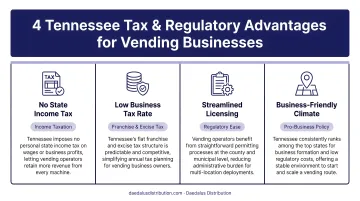
Together, these conditions lower the cost and complexity of getting started—and of growing once you are.
How to Start a Vending Machine Business in Tennessee – Step by Step
The order matters. Common mistakes include buying a machine before securing a location, skipping business registration, or launching before understanding Tennessee's compliance requirements. Follow these stages in sequence.
Step 1 – Choose Your Vending Niche and Target Location Type
Match machine type to location demographics for maximum profitability.
Traditional snack and beverage machines work best in:
- Office buildings and corporate campuses
- Warehouses and manufacturing facilities
- Healthcare waiting areas
- Schools and universities
Combo machines (snacks + beverages in one unit) suit:
- Apartment building common areas
- Gyms and fitness centers
- Small retail locations
Smart/digital machines with touchscreen interfaces excel in:
- Corporate campuses requiring remote inventory management
- High-traffic facilities where cashless payments are expected
- Multi-location operations needing centralized data tracking
Modern digital vending machines with touchscreen interfaces and remote inventory tracking let Tennessee operators monitor sales data and stock levels across multiple locations — no constant on-site visits required. Daedalus Distribution is the U.S.-authorized reseller of Vendekin digital vending machines for operators pursuing this route.
Product-to-location matching examples:
- Fitness centers: Protein bars, energy drinks, sports drinks, bottled water
- Manufacturing facilities: Traditional snacks, sodas, energy drinks, coffee
- Healthcare facilities: Healthy snacks, low-calorie options, juices, bottled water
- Corporate offices: Premium snacks, specialty beverages, fresh food options
Step 2 – Research and Validate Locations Before Buying
Location is the single most critical variable in vending profitability. A machine in a low-traffic location will underperform regardless of how well it's stocked.
Visit shortlisted locations in person:
- Observe foot traffic during different times of day (morning, lunch, afternoon)
- Check for existing vending coverage (competitors may already serve the location)
- Note dwell time (do people linger, or just pass through?)
- Assess proximity to other food options (vending performs better with limited nearby alternatives)
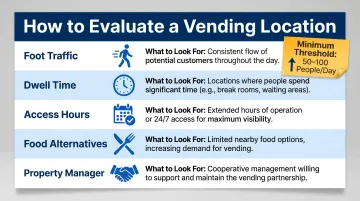
What to evaluate in Tennessee locations:
| Factor | What to Look For |
|---|---|
| Daily foot traffic | Minimum 50-100 people per day for viability |
| Dwell time | Break rooms, waiting areas, employee lounges (not hallways) |
| Access hours | 24/7 facilities or extended-hour operations increase sales potential |
| Food alternatives | Limited nearby options increase machine usage |
| Property manager openness | Willingness to negotiate commission-based or free placement |
When pitching property managers, lead with concrete value:
- Highlight convenience for their employees or residents
- Reference comparable placements you've secured elsewhere
- Propose commission structures (typically 10-20% of gross sales) or free placement in exchange for exclusivity
Do not buy a machine until you have at least one confirmed placement in writing.
Step 3 – Register Your Business and Set Up Finances
Legally forming your business protects your personal assets and simplifies tax filing.
Tennessee business registration steps:
Register through TNCaB (Tennessee Centralized Administrative Business) system at sos.tn.gov/businesses
- Choose business structure (LLC recommended for liability protection)
- File Articles of Organization for LLC or Articles of Incorporation for corporation
- The state typically processes filings within 5-7 business days
Obtain an EIN (Employer Identification Number) from the IRS
- Free application at irs.gov
- Required for business bank accounts and tax filing
- Issued immediately upon online application
Open a dedicated business bank account
- Separates personal and business finances
- Simplifies accounting and tax reporting
- May be required by location owners before signing placement agreements
Tennessee business license requirements:
Tennessee requires a business license from your county or municipal clerk based on gross receipts:
| Gross Receipts | License Type | Fee | Issuing Authority |
|---|---|---|---|
| Under $3,000/year | Optional | $15 | Local county/city clerk |
| $3,000-$99,999/year | Minimal activity license | $15 | Local county/city clerk |
| $100,000+/year | Standard business tax | Varies | TN Dept. of Revenue |
Most new vending operators fall into the minimal activity license category initially.
Step 4 – Get Your Tennessee Permits and Set Up Tax Compliance
Tennessee requires two core licenses for vending operators:
1. Tennessee Vending Permit ($100 annual)
- Issued by Tennessee Department of Agriculture
- Apply online at licenses.app.tn.gov
- Renews annually on August 1
- Must be displayed at each machine location
2. Sales tax registration
- Register through TNTAP portal at tntap.tn.gov/eservices
- Tennessee vending sales tax: State rate (7% general, 4% for qualifying food) + standardized 2.25% local rate
- File monthly sales tax returns
Common mistake: Operating without permits carries real consequences in Tennessee—fines, machine removal, or license suspension. Submit permit applications before placing any machine.
Step 5 – Acquire Your Machines and Secure Placements
New vs. used vs. lease decision:
Used machines ($1,000-$3,000):
- Lower upfront cost
- Higher repair risk
- May lack modern payment features
- Suitable for testing the market with minimal investment
New machines ($3,000-$6,000+):
- Include warranties
- Built-in cashless payment capability
- Lower maintenance risk
- Better for scaling operations
Lease options:
- Lower initial outlay
- Monthly payments
- May include maintenance
- Higher total cost over time
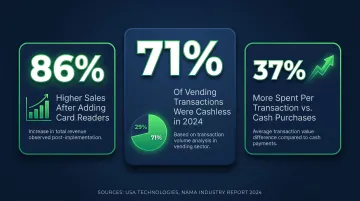
Whichever path you choose, cashless payment capability is effectively non-negotiable in today's market. Cashless payment capability is effectively required: Research shows that cashless vending machines generated 86% higher sales after adding card readers. In 2024, 71% of all vending transactions were cashless—a 17% increase from 2023—and consumers spend 37% more per transaction compared to cash purchases.
Look for machines that accept credit cards, debit cards, Apple Pay, and Google Pay out of the box. That payment flexibility alone separates high-performing locations from mediocre ones.
Step 6 – Launch, Stock, and Track Performance
The first 30-60 days are a learning phase. Treat this period as market research.
Start with proven bestsellers:
- Popular sodas (Coke, Pepsi, Dr. Pepper)
- Bottled water
- Energy drinks (Red Bull, Monster)
- Classic chips (Lay's, Doritos, Cheetos)
- Candy bars (Snickers, Reese's, M&Ms)
- Snack bars (Nature Valley, Clif Bar)
Track sell-through rates by product:
- Which products sell out first?
- Which sit for days without movement?
- What time of day sees the most sales?
Set up basic performance tracking from day one:
| Metric | Why It Matters |
|---|---|
| Gross sales per machine per week | Determines location viability |
| Cost of goods sold (COGS) | Calculates actual profit margin |
| Spoilage rate | Identifies overstocking or slow-moving products |
| Commission paid to location | Impacts net profitability |
Adjust based on real data, not assumptions. If healthy snacks don't sell in a warehouse, replace them with traditional chips. If energy drinks outsell soda 3:1, increase energy drink slots.
Most successful operators aim for 30-40% profit margin after COGS, commissions, and restocking costs.
Tennessee Licenses, Permits, and Compliance Requirements
Tennessee has a clearly defined set of state-level requirements for vending operators. Knowing them before you place your first machine keeps you clear of fines, permit lapses, and forced shutdowns.
Vending Operator Permit
Tennessee requires a $100 annual Vending Permit issued by the Tennessee Department of Agriculture under Tennessee Code Annotated 53-12-104.
Application requirements:
- Operator's full name and Tennessee principal business address
- Names and addresses of all partners (if applicable)
- Location of commissaries, warehouses, and storage facilities
- Product types to be dispensed and total number of machines by type
- Operator's signature
Renewal: August 1 annually
Display requirements: Each vending machine or integrated machine bank must display:
- License number
- Operator's name
- Operator's address
Exemptions: Machines vending only bottled/canned soft drinks, prepackaged candy, cookies, crackers, gum, or unpackaged nuts do not require this permit (but must still comply with general food safety laws).
Enforcement: The commissioner may suspend or revoke licenses for violations. In cases of grossly unsanitary conditions or adulteration posing health hazards, the commissioner may act without notice to condemn products and order immediate discontinuance.
Sales Tax Registration and Rates
Once your permit is in hand, sales tax registration is your next administrative step — and Tennessee's vending-specific structure makes it more manageable than most states.
Tax rates:
- State sales tax: 7% general merchandise or 4% for qualifying food and food ingredients
- Local sales tax: Standardized 2.25% rate for ALL vending sales, regardless of actual local jurisdiction rate
That standardized local rate means you report one flat percentage across every Tennessee location, instead of tracking different county and city rates for each machine.
Registration: Complete through the Tennessee Taxpayer Access Point (TNTAP)
Filing: Report vending sales monthly on the State and Local Sales and Use Tax Return. Vending amounts are deducted on Schedule B, Line 6, and reported separately on Schedule C, Lines 13 and 14.
Health Permits for Food Vending
A health permit is required for any food or beverage vending in Tennessee, issued by the Tennessee Department of Agriculture under the Retail Food Store Sanitation Rule.
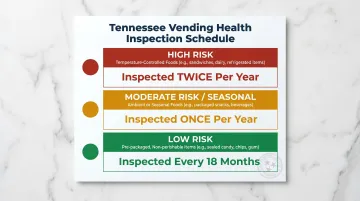
Inspection frequency (risk-based tiers):
| Risk Level | Inspection Frequency |
|---|---|
| High-risk (temperature-controlled foods) | Twice per year |
| Moderate-risk / seasonal | Once per year |
| Low-risk | Every 18 months |
Initial permit process:
- Submit Food Retail / Plan Review Questionnaire
- Provide electronic floor plan showing equipment locations
- Submit proof of business registration with TN Dept. of Revenue
- Email submissions to NewFood.Business@TN.gov
Inspection scoring: A score below 70 is a failing grade and triggers a mandatory follow-up inspection. Operators must make their inspection scores available to the public upon request.
Product Restrictions and Placement Rules
CBD and hemp-derived cannabinoid products are strictly prohibited in Tennessee vending machines. Public Chapter 1048 (TCA 43-27-204) requires these products to be sold face-to-face at licensed retail locations only, to customers aged 21 or older.
Civil penalties:
- First offense: Up to $5,000
- Subsequent offenses: Up to $10,000
School vending compliance: Machines in Tennessee schools must comply with federal Smart Snacks standards:
- Snacks: 200 calories or less
- Elementary and middle schools: Caffeine-free beverages required
- High schools: Caffeine permitted in low-calorie beverages only
Government building restrictions: Tennessee Business Enterprises (TBE) holds Randolph-Sheppard Act priority for vending in federal, state, county, and municipal buildings. TBE operates 143 facilities statewide generating over $20 million annually — that footprint leaves private-sector locations as the practical path for independent operators.
Nashville-specific rules:
- Sidewalk vending on Lower Broadway is prohibited
- Outdoor placements elsewhere require a $100 Sidewalk Encroachment Permit from Nashville Department of Transportation
- Eligible areas shown on NDOT Vending Area Map
Frequently Asked Questions
Do you need a permit for a vending machine in TN?
Yes. Tennessee requires a $100 annual Vending Permit from the Tennessee Department of Agriculture, renewed each year on August 1. The permit must be displayed at each machine location. Apply online at licenses.app.tn.gov.
Do I need an LLC to have a vending machine?
An LLC is not legally required to operate vending machines in Tennessee, but it's strongly recommended. Key advantages include:
- Separates personal assets from business liability
- Simplifies tax filing as a pass-through entity
- May be required by some locations or insurers before signing placement agreements
What is the sales tax rate for vending machines in Tennessee?
Tennessee vending operators pay the state sales tax rate (7% general or 4% for qualifying food items) plus a standardized 2.25% local rate, regardless of the actual local jurisdiction rate. That flat local rate applies statewide, which simplifies filing across multiple locations.
How much does it cost to start a vending machine business in Tennessee?
Startup costs range from roughly $1,500 to $7,000+, depending on your machine choice and setup. New machines run $3,000-$6,000+; used machines cost $1,000-$3,000. Budget an additional $300-$600 for inventory, permits, and insurance.
Can you sell CBD or hemp products in a Tennessee vending machine?
No. Tennessee strictly prohibits the sale of hemp-derived cannabinoid products through vending machines. These products must only be sold face-to-face at licensed retail locations to customers aged 21 or older. Violations carry civil penalties up to $5,000 for first offenses.
What are the best locations for vending machines in Tennessee?
Top spots include office buildings, warehouses, healthcare facilities, gyms, apartment complexes, and university campuses—especially in Nashville, Memphis, Knoxville, and Chattanooga. Prioritize locations with 50-100+ daily visitors, limited nearby food options, and built-in dwell time like break rooms or waiting areas.