Introduction
Employees leaving the office for snacks costs time and focus. According to workplace food service research, on-site food access saves an average of 9 minutes per person per day and reduces time spent away from workstations by 32%. Yet most break rooms still lack it—and 78% of employees say food access at work makes them feel more valued.
Getting a vending machine for your office involves real decisions: how many employees you have, what space you're working with, which machine type fits, and whether to buy, lease, or bring in an operator. Get those decisions right, and the setup runs itself. Get them wrong, and you end up with a machine that sits half-stocked in a corner. Here's how to do it right.
Key Takeaways
- Getting started means evaluating your space, headcount, machine type, and acquisition model before installation
- Managed services are often free for employers—the provider owns, stocks, and maintains the machine
- Machine choice hinges on foot traffic, square footage, power access, and product type (snacks, drinks, or fresh food)
- Digital machines with cashless payment outperform cash-only equipment in sales and user satisfaction
- Underestimating demand or picking the wrong location are the two most common setup mistakes to avoid
How to Get a Vending Machine for Your Office or Break Room
Step 1: Assess Your Break Room and Employee Needs
Start by estimating daily users—the number of employees and visitors who will regularly use the machine. This determines whether a single machine is sufficient or if you need multiple units.
Identify what employees actually want by conducting a brief survey or observing current purchasing habits. 65% of vending operators report receiving requests for healthier product mixes, and dietary preferences like gluten-free, vegan, and low-sugar options are increasingly important.
Confirm infrastructure basics:
- Standard electrical outlet available in the break room
- Wi-Fi or cellular connectivity accessible (required for modern digital machines)
- Available floor space measured and adequate
Most managed vending providers require 40-50 employees as a minimum threshold before placing a machine at no cost. Smaller offices may need to purchase a machine outright.
Step 2: Choose the Right Type of Vending Machine
Understanding machine categories helps match the right solution to your workplace:
Main machine types:
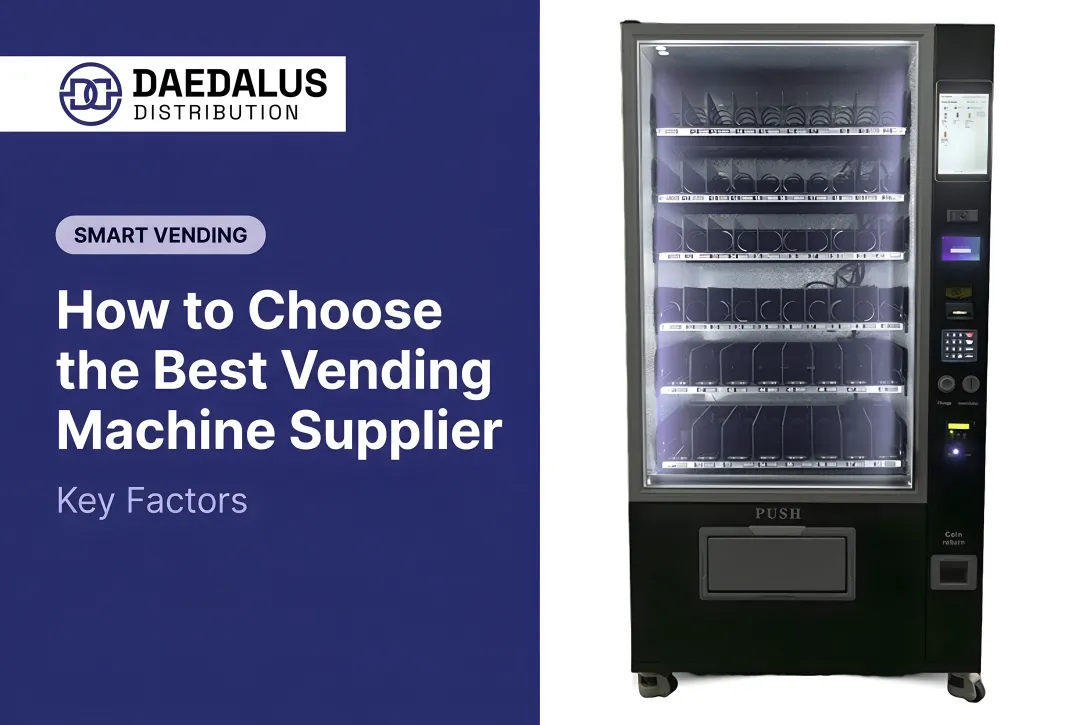
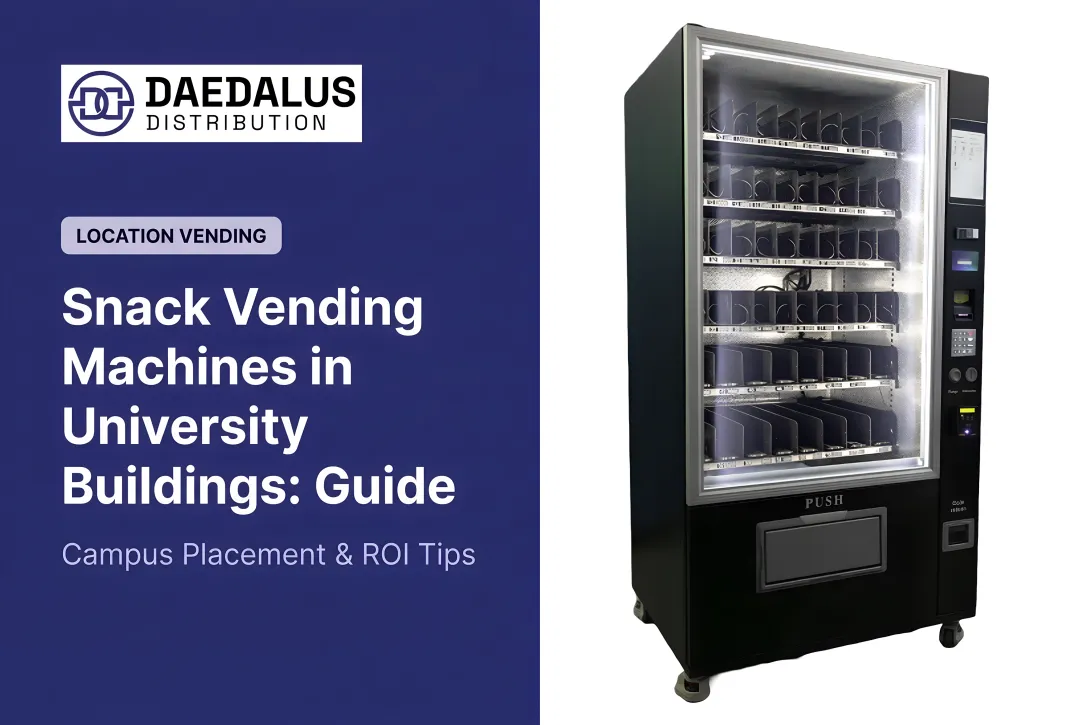
- Snack machines — Glass-front units with coil dispensers for chips, candy, and packaged snacks
- Cold beverage machines — Refrigerated units dispensing soft drinks, water, and sports drinks
- Combo machines — Single units combining snacks and beverages; space-saving and ideal for smaller offices
- Fresh food machines — Refrigerated units for salads, sandwiches, and prepared meals
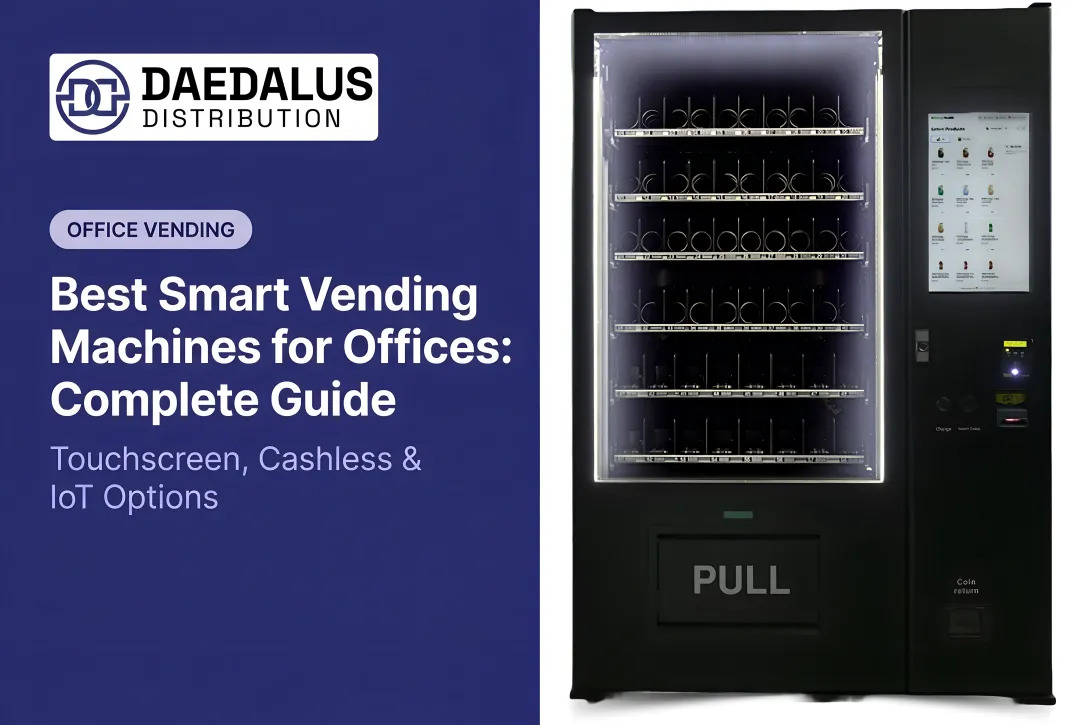
- Digital/smart machines — Touchscreen interfaces with cashless payment and remote inventory tracking
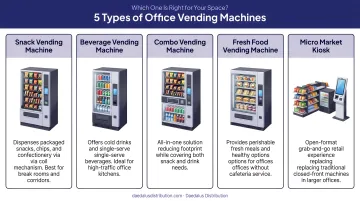
Combo machines are often the best starting point for smaller offices since they serve dual purposes without requiring extra floor space. Larger teams may benefit from dedicated snack and beverage units placed side by side.
Smart machines from manufacturers like Vendekin Technologies—distributed in the U.S. by Daedalus Distribution—are increasingly the default choice for operators building modern routes, partly because remote monitoring cuts unnecessary service visits.
Step 3: Select an Acquisition Model
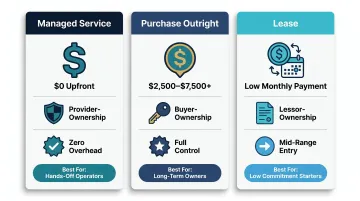
Three main acquisition models exist, each suited to different budgets and goals:
| Model | Upfront Cost | Who Owns Equipment | Best For |
|---|---|---|---|
| Managed/full-service | $0 | Vending provider | Offices wanting zero operational overhead |
| Purchase outright | $2,500–$7,500+ | You | Operators controlling margins or building a route |
| Lease | Low monthly payment | Lessor (until paid off) | Businesses with limited capital but steady demand |
With managed placement, the provider handles stocking and maintenance—you supply space and electricity. Purchasing outright gives full control; expect $2,500–$5,000 for snack machines, $3,000–$6,000 for beverage units, and $3,500–$7,500 for combos. Leasing sits in between: lower entry cost, with rates varying by provider and credit profile.
Step 4: Contact and Vet Vending Providers
What to look for when evaluating providers:
- Service territory coverage in your area
- Response time for maintenance calls and machine downtime
- Product selection flexibility and customization options
- Machine technology (cashless payment, remote monitoring)
- Contract terms and exclusivity clauses
Key questions to ask:
- What happens if the machine breaks down, and what's your response time?
- Who handles restocking, and how often?
- Can product selection be customized based on employee preferences?
- Are there revenue-sharing arrangements or minimum employee requirements?
- What are your contract terms, renewal clauses, and removal conditions?
Step 5: Prepare the Space and Coordinate Installation
Site preparation typically involves:
- Clearing the placement area and confirming floor can support machine weight
- Ensuring the electrical outlet is grounded and meets voltage requirements (typically 120V)
- Providing dimensions and access details in advance
- Coordinating building access and elevator use in multi-floor offices
Installation by a qualified provider usually takes a few hours. Assigning one point of contact for the day—someone who can grant access and answer on-site questions—keeps the process moving without interruption.
What to Assess Before Getting Started
The quality of your vending setup is determined long before the machine arrives. Upfront assessment shapes whether the machine gets used, stays stocked, and delivers value.
Headcount and Usage Volume
Most managed vending providers require a minimum of 40-50 employees before placing a machine for free. This threshold appears consistently across industry sources including Bernick's, EJR Vending, and other operators.
Smaller offices below this threshold have two options: purchase a machine outright or explore compact combo units designed for low-traffic environments.
Space and Placement Considerations
Machines placed in low-traffic areas or poorly lit corners get used far less. Place yours near the main break room, common seating area, or a high-foot-traffic corridor — visible, well-lit placement correlates with a 32% increase in usage.
Physical requirements:
- Minimum clearance space (4-6 inches on sides, 2-4 inches at rear for ventilation)
- At least 3 feet in front for user access and ADA compliance
- Level floor surface
- Proximity to a grounded outlet
Standard vending machine dimensions vary by type:
| Machine Type | Height | Width | Depth |
|---|---|---|---|
| Glass-front snack | 72" | 39" | 35" |
| Cold beverage | 72" | 32" | 26" |
| Combo unit | 72" | 34-40" | 35" |
Budget and Cost Expectations
Managed service placements typically cost employers nothing. The vending company owns and operates the machine, earning revenue from product sales. Your only cost is electricity.
If you're buying outright, expect these ranges by machine type:
- Snack machines: $2,500-$5,000
- Cold beverage machines: $3,000-$6,000
- Combo machines: $3,500-$7,500
Additional cost variables include:
- Electricity: ENERGY STAR-qualified beverage machines run
1,354 kWh/year ($134 annually at $0.099/kWh) and save roughly 1,000 kWh per year over standard units - Product procurement, if you're self-stocking
- Maintenance, if not covered under a service contract
Key Factors That Determine the Right Vending Setup
Not every machine works for every office—outcomes depend on matching the right variables to your environment and workforce.
Daily Foot Traffic
A machine that works perfectly for a 40-person office will be perpetually empty in a 200-person facility. Traffic volume determines how many machines are needed and how frequently they require restocking.
High-traffic environments benefit from larger-capacity machines or multiple units. Low-traffic spaces need machines with longer product shelf lives to avoid waste and spoilage.
Machine Technology and Payment Options
Employees increasingly don't carry cash. 71% of all vending machine sales in 2024 were cashless, and cashless transactions averaged $2.24 versus $1.78 for cash—a 37% higher ticket size.
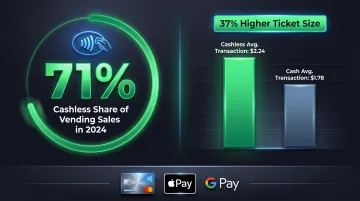
Machines that accept only bills and coins see dramatically lower usage. Look for machines that support:
- Credit and debit cards
- Apple Pay and Google Pay
- Contactless tap-to-pay
Modern digital machines with touchscreen interfaces also enable remote inventory tracking, which reduces service gaps and improves uptime.
Product Mix and Customization
A mismatched product selection leads to slow sales, expired products, and employee disengagement. Work with your provider to tailor the product mix based on dietary preferences, time-of-day usage patterns, and any company wellness initiatives.
Modern vending software platforms provide real-time sales reporting that identifies top-selling products by unit and time of day. Use that data to revisit the product mix periodically—what sells in week one often shifts within a quarter.
Service and Maintenance Reliability
A vending machine that's frequently out of order or chronically understocked harms employee morale and trust. Prioritize providers with local service capabilities and defined response time commitments.
While industry-wide SLA benchmarks vary, service contracts typically include response time clauses. Look for provisions allowing termination if the vendor fails to meet promised service levels consistently.
Buying vs. Managed Vending Service: Which Model Works for Your Office?
How you acquire a vending machine shapes everything: who owns it, who keeps it stocked, and who foots the repair bills. Two models dominate the office vending space, and the right one depends on your headcount, budget, and appetite for day-to-day involvement.
| Managed Service | Purchasing Outright | |
|---|---|---|
| Who owns the machine | Vending company | You |
| Who restocks it | Vending company | You (or a hired operator) |
| Who handles repairs | Vending company | You |
| Revenue from sales | Vending company | You |
| Upfront cost | None (space + electricity only) | Purchase or lease price |
| Best for | Offices with 40–50+ employees wanting no day-to-day management | Businesses wanting product control, or operators building a vending route |
Common Mistakes When Setting Up Office Vending
Avoid these three setup errors before your first machine goes live:
- Poor placement: Back hallways and storage rooms kill usage. Put the machine where foot traffic is highest — near entrances, break rooms, or common areas — and usage follows naturally.
- Skipping the contract review: Managed service agreements often include 1-3 year terms, machine removal clauses, revenue splits, and underperformance provisions. Read every line before signing.
- Starting too small: One snack machine for a 300-person office empties daily and breeds frustration fast. Match the machine count to your actual headcount rather than scaling up under pressure later.
Frequently Asked Questions
How much does it cost to put a vending machine at a business?
Cost depends on the acquisition model. Managed service placements are typically free to the employer—the vending company owns and operates the machine. Purchasing a machine outright ranges from $2,500-$7,500 based on type and features. Electricity is typically the only ongoing cost for employers under managed arrangements.
How do vending machines in offices work?
Office vending machines are stocked with snacks, beverages, or food, and employees purchase items using cash or cashless payment methods. Modern machines connect to the internet for remote inventory monitoring, allowing operators to track stock levels and schedule restocking efficiently.
Can you put a $2 bill in a vending machine?
Most vending machines accept $1 and $5 bills, but not all validators reliably accept $2 bills due to their rarity. Cashless payment options—card readers and mobile wallets—eliminate this issue entirely.
Do I need a contract to get a vending machine for my office?
Managed vending placements typically involve a contract covering exclusivity, minimum service periods, and removal terms. Buying a machine outright has no ongoing service contract, though manufacturer warranty terms still apply.
How many employees do you need to qualify for a free office vending machine?
Most managed vending providers require a minimum headcount—commonly 40-50 employees—before placing a machine at no cost. Smaller offices may need to purchase a machine or explore compact combo units designed for lower-traffic environments.
What types of vending machines work best in a break room?
Combo machines (snack + beverage) are the most space-efficient choice for small-to-mid-sized offices. Larger workplaces often pair dedicated snack and beverage units, while fresh food machines work well where employees need full meal options on-site.