Introduction
Vending machines have evolved from passive coin-operated boxes into intelligent retail endpoints. Today's operators can monitor, manage, and optimize entire fleets remotely—from a single dashboard. Real-time inventory data, cashless payment processing, and machine health alerts now arrive on a dashboard instead of requiring physical inspections.
While the overall retail vending market grows at 3.6% annually, connected vending machines are expanding at 9.78% CAGR—nearly triple the pace. That gap signals where the industry is headed: operators who embrace IoT connectivity gain measurable advantages in efficiency, uptime, and revenue.
This post breaks down what IoT connectivity actually enables, which features matter most, how the profitability case stacks up, and how to get started with modernization.
Key Takeaways
- IoT-enabled machines send real-time data on sales, inventory, and machine health — so operators manage their routes remotely instead of guessing.
- Cashless payments, live inventory tracking, health alerts, and sales analytics are the features that drive measurable ROI
- Fewer wasted service trips and fewer stock-outs translate directly into lower costs and higher uptime
- Start with payments, add telemetry next, then layer in reporting — each step compounds the last
- Buying IoT-native machines skips the retrofit headache entirely — no patchwork hardware, no compatibility guesswork
What Does "IoT-Enabled" Actually Mean for a Vending Machine?
Traditional vending machines operate standalone. They accept cash, dispense products, and provide no data output. An operator only learns what happened inside the machine when they open it on their next scheduled visit.
An IoT-connected machine uses sensors and a wireless communication layer to continuously send operational data to a cloud platform or dashboard. The operator sees what's selling, what's running low, and whether the machine is functioning properly—all without leaving their office.
IoT vs. AI: Clearing Up the Confusion
"Smart" doesn't automatically mean AI. IoT is the foundational communication layer—the machine talking to you. According to the National Automatic Merchandising Association (NAMA), telemetry means recording and reading vending machine information off-site through a wireless connection.
AI is an analytical layer built on top of IoT data. It supports demand forecasting, predictive restocking, and early fault warnings. But AI only becomes useful after you've collected sufficient clean data. For most operators, IoT delivers immediate value—AI is a later-stage advantage once the data foundation is in place.
Cellular vs. Wi-Fi Connectivity
IoT-connected vending machines can use either cellular networks (4G LTE) or Wi-Fi. Cellular is generally preferred because it keeps machines on dedicated, reliable networks rather than depending on a location's local infrastructure.
This distinction matters in practice. Wi-Fi access is often restricted or complicated by firewalls in hospitals, government buildings, and manufacturing facilities. Cellular sidesteps those obstacles entirely:
- No on-site network setup or IT approvals required
- No passwords, firewall exceptions, or local network dependencies
- Consistent connectivity regardless of where the machine is placed
Core IoT Features in Modern Vending Machines
Cashless and Contactless Payments
IoT enables card, NFC, and mobile wallet payment processing directly at the machine. Cashless transactions now account for 71% of all vending sales, with 77% of those being contactless.
This shift matters because cashless tickets average $2.24 compared to $1.78 for cash—a 37% increase. Cash-only machines leave money on the table. Payment data feeds directly into sales reporting, creating a closed loop from transaction to insight.
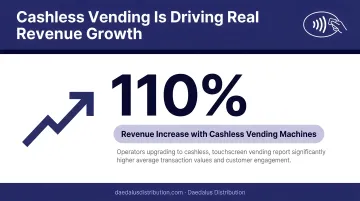
A Michigan State University study found that adding cashless technology to low-performing machines resulted in 110% average top-line sales growth over 18 months. Transaction volume grew 26%, and 70% of revenue growth came from increased transactions, not just price increases.
Real-Time Inventory Monitoring
Sensors and sales tracking allow operators to see current stock levels per slot or product without visiting the machine. This data drives smarter restocking decisions and reduces both overstock and stock-outs.
Stock-outs are costly. An NBER field study found that removing a single top-selling item (Snickers) reduced total vends by 217 units and decreased profits by $56.75 over the test period. Real-time inventory visibility lets operators prioritize restocking high-velocity items before revenue evaporates.
Machine Health Monitoring and Alerts
IoT-connected machines detect and flag issues like:
- Temperature drift in refrigerated units
- Motor errors
- Door-open events
- Payment system failures
Operators receive instant alerts when problems occur. This shifts the maintenance model from reactive (problem discovered on next scheduled visit) to proactive (operator alerted the moment a fault occurs and can dispatch service immediately).
Telemetry monitoring can reduce emergency repair calls by up to 80%, with operators reporting average savings of $2,000 to $5,000 per machine annually through reduced downtime and repair costs.
Remote Configuration and Pricing
Operators can push price changes, update planograms, or modify display content remotely through a software dashboard. This eliminates on-site visits just to update settings.
Testing a price increase at high-traffic locations or swapping a slow-selling SKU for a new product takes seconds from a dashboard — no truck rolls, no wasted labor hours. That speed to iterate creates operational flexibility that traditional machines simply can't match.
Sales Data Analytics and Reporting
All that remote control only works when backed by solid data. Every transaction is logged and reportable, giving operators a clear picture of performance across their entire fleet:
- What sold
- When it sold
- Which machine generated the sale
- Total volume per product
This insight enables smarter location decisions, product mix adjustments, and visit scheduling. Instead of running the same planogram everywhere, operators tailor product assortments per site based on what the data shows performs best.
Predictive Maintenance
Patterns in machine health data—repeated error codes, unusual sales drops, temperature fluctuations—can signal maintenance needs before full failure occurs. IoT sensors and machine learning algorithms enable predictive maintenance, improving early fault detection and reducing redundant service interventions.
This reduces emergency service costs and extends machine lifespan by catching small problems before they cascade into expensive failures.
How IoT Vending Machines Benefit Operators Day-to-Day
Fewer Wasted Service Trips
Without IoT, operators run routes on fixed schedules regardless of actual need. IoT telemetry shows which machines genuinely need restocking or servicing.
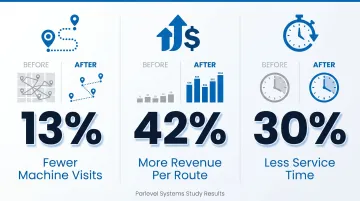
A study by Parlevel Systems found that IoT and dynamic routing reduced machine visits by 13% while increasing revenue collection by 42% per route. Operators skip machines that are still well-stocked, saving time and fuel costs. Service time dropped 30% through prekitting—preparing inventory based on real data before leaving the warehouse.
Reduced Stock-Outs and Lost Revenue
Real-time inventory visibility lets operators restock popular items before they run out. The revenue impact is direct: a machine sitting empty on a high-demand product generates zero sales until the next visit.
Beyond the immediate revenue loss, stock-outs damage consumer goodwill. Customers who encounter an empty machine multiple times stop checking it. IoT-enabled tracking eliminates this blind spot.
Lower Downtime Through Proactive Alerts
Traditional model: A refrigeration failure happens Monday morning. The operator discovers it Thursday afternoon during the scheduled route. Three days of spoiled product and lost sales.
IoT model: The temperature sensor alerts the operator Monday at 9:15 AM. Service is dispatched by 10:00 AM. Downtime is measured in hours, not days. In high-traffic locations, this protects thousands of dollars in weekly revenue.
Data-Driven Product and Placement Decisions
Protecting uptime is just part of the picture. Sales data across a machine fleet also reveals which products perform at which locations — and the differences are significant:
- Corporate offices tend to favor energy drinks and protein bars
- Hospital waiting rooms lean toward bottled water and granola
- University campuses move soda and candy fastest
Operators using IoT data to optimize planograms report pulling an extra $100 per machine per service visit. The ability to tailor product assortments per site rather than running the same planogram everywhere directly impacts per-machine revenue.
24/7 Operation Without On-Site Staff
Cashless payments, remote management, and real-time monitoring allow machines to operate and generate revenue around the clock. Operators only intervene when data signals they need to.
This is a key advantage over staffed retail formats. A vending machine doesn't require hourly wages, benefits, or scheduling. It doesn't call in sick. It sells products 24/7, and IoT connectivity ensures it does so efficiently.
Modernizing Your Vending Operation: A Practical Upgrade Path
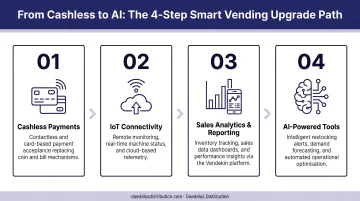
Step 1 — Establish Cashless Payments
This is the non-negotiable first upgrade. Many locations now expect cashless as the default. It increases conversion rates and feeds essential transaction data into your reporting system.
Remember: cashless tickets average 37% higher than cash. If you're still running cash-only machines, you're leaving revenue on the table with every transaction.
Step 2 — Add Telemetry for Operational Visibility
Connect machines to a monitoring platform so sales, machine status, and alerts are visible remotely. This step eliminates guesswork from route planning.
Parlevel Systems' data showed operators reduced visits by 13% and increased revenue collection by 42% per route. That's where most operators see an immediate ROI shift.
Step 3 — Build Consistent Reporting Habits
Data is only useful when reviewed and acted on. Use your dashboard to:
- Track performance by machine and location
- Adjust product mix based on what the data shows
- Build service schedules around actual need, not fixed intervals
Set a weekly review cadence. Which machines are top performers? Which locations underperform? What products consistently sell out? Let data drive decisions, not assumptions.
Step 4 — Consider AI Tools Only After the Foundation Is Solid
AI-powered demand forecasting and predictive restocking work well when clean, consistent data already exists. Operators with messy planograms or inconsistent service records won't benefit from AI yet.
The sequence matters: build the IoT foundation, collect quality data, and establish operational discipline. Only then should you layer in AI tools your data infrastructure can actually support.
Operators who'd rather avoid the retrofit process altogether can start with machines that include IoT capabilities from the start. Vendekin machines available through Daedalus Distribution come with touchscreen interfaces, cashless payments, and remote inventory tracking as standard features. No retrofitting required.
Are IoT Vending Machines Profitable?
Core Profitability Drivers
IoT unlocks several margin-expanding factors:
- Higher transaction rates from cashless acceptance
- Reduced operational waste from smarter routing
- Faster fault resolution preventing revenue loss from downtime
- Better product-location matching from sales data
Together, these factors compress costs and grow revenue simultaneously — which is why connected machines consistently outperform traditional ones.
Revenue and Margin Benchmarks
The average U.S. vending machine generates $6,284 in revenue annually. Operator profit margins typically range from 25% to 35% after accounting for product costs, location commissions, fuel, and maintenance.
Cashless, connected vending machines typically generate 15–35% higher revenue due to increased transaction frequency and higher average spend. Operators utilizing telemetry to optimize planograms and reduce spoilage report measurable gains per service visit.
Product Category Economics
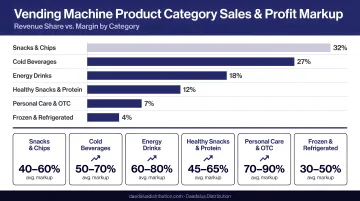
Not all products perform equally:
- Energy drinks: 60-80% markup
- Candy and chocolate: 50-70% markup
- Bottled drinks: 30-50% markup
According to NAMA, snacks account for 33% of vending sales, beverages 29%, and coffee 24%. IoT data helps operators identify which products and locations maximize returns rather than relying on general trends.
Realistic Expectations
IoT machines require upfront investment in hardware and connectivity. The key question is whether the efficiency gains and revenue lift justify that cost at your specific traffic levels.
The strongest ROI typically comes from high-traffic locations where downtime and stock-outs are most costly. A machine generating $10,000 annually justifies the IoT investment faster than one generating $3,000.
Daedalus Distribution includes cloud-based management software with every Vendekin machine at no additional cost, with no separate software license fees. For specific pricing and total cost details, contact their team at contact@daedalusdistribution.com or call +1 843-490-2804.
Frequently Asked Questions
Are smart vending machines profitable?
Smart vending machines are profitable. IoT features like cashless payments, remote monitoring, and data-driven restocking reduce operating costs and increase uptime — each machine performs more consistently and generates more revenue than a traditional unit.
What is the most profitable vending machine business?
Snacks and beverages remain the highest-volume categories, but specialty machines for fresh food, personal care, or electronics in premium locations command higher per-transaction value. IoT data helps operators identify which products and locations maximize returns.
Are vending machines IoT devices?
Traditional vending machines are not IoT devices. Modern smart vending machines are—they use sensors, wireless connectivity, and cloud software to transmit real-time data on sales, inventory, and machine health to operators.
What is an example of IoT in retail?
Smart vending machines are one of the clearest examples of IoT in retail. Connected machines track inventory in real time, accept mobile payments, and send health alerts to operators without on-site monitoring.
What should I look for when buying a smart vending machine?
Prioritize machines with built-in IoT connectivity, real-time inventory tracking, and cashless payment support. A U.S.-based parts and service network matters too — fast maintenance access directly affects uptime and profitability.