Introduction
The U.S. vending machine industry generated $18.2 billion in 2023. As operators plan for 2026, one reality stands out: vending machine costs vary dramatically—from under $3,000 for basic used units to over $30,000 for smart digital machines equipped with IoT connectivity and cashless payment systems.
Many first-time buyers fixate on the purchase price while missing recurring expenses—location commissions, electricity, and payment processing fees—that can easily add up to $500 or more per month. Understanding the full cost picture is what separates profitable operators from those who underplan.
This guide breaks down 2026 price ranges by machine type, the factors driving cost differences, and practical budgeting tips based on your location and business model.
Key Takeaways
- New vending machines cost $2,500–$10,000 for traditional units, or $10,000–$30,000+ for smart machines with touchscreens and remote management
- Used machines start around $1,200 but carry higher repair risk and often lack modern payment systems
- Machine type, capacity, payment technology, and condition are the primary cost drivers
- Beyond purchase price, budget for inventory ($200–$800), commissions (10–25% of revenue), electricity ($20–$80/month), and maintenance
- Match your machine to your location's traffic, product mix, and operational capacity—price is just one part of the decision
How Much Does a Vending Machine Cost in 2026?
Vending machine pricing is far from fixed. Two machines that look identical on a showroom floor can differ by thousands of dollars based on technology integration, build quality, and included features. Operators routinely make two critical budgeting mistakes: underestimating total investment by ignoring recurring costs, and choosing the wrong machine type for their intended location, which leads to low ROI despite a low purchase price.
Budget Tier: Entry-Level ($1,200–$4,000)
What's typically included:
- Used or refurbished snack/combo machines
- Basic cash-only or older cashless payment systems
- Mechanical dispensing mechanisms
- Limited or no warranty coverage
- May require immediate repairs or part replacements
Best for: First-time operators testing new locations, buyers with limited upfront capital, or those comfortable performing hands-on maintenance and troubleshooting.
Budget Tier: Mid-Range ($4,000–$9,000)
What's typically included:
- New snack, drink, or combo machines
- Modern bill validators and basic cashless payment readers
- LED interior lighting
- Standard refrigeration on drink units
- Manufacturer warranty (typically 1 year)
Best for: Operators building a small route of 2–5 machines, businesses placing units in moderate-traffic locations like offices, schools, or gyms where reliability matters but advanced features aren't required.
Budget Tier: Smart/Digital ($9,000–$30,000+)
What's typically included:
- All-digital touchscreen interfaces (10-inch or 22-inch displays)
- Cashless and contactless payment systems (credit, debit, Apple Pay, Google Pay)
- Real-time remote inventory tracking and sales data reporting
- IoT connectivity for machine health monitoring
- Energy-efficient components and reduced mechanical complexity
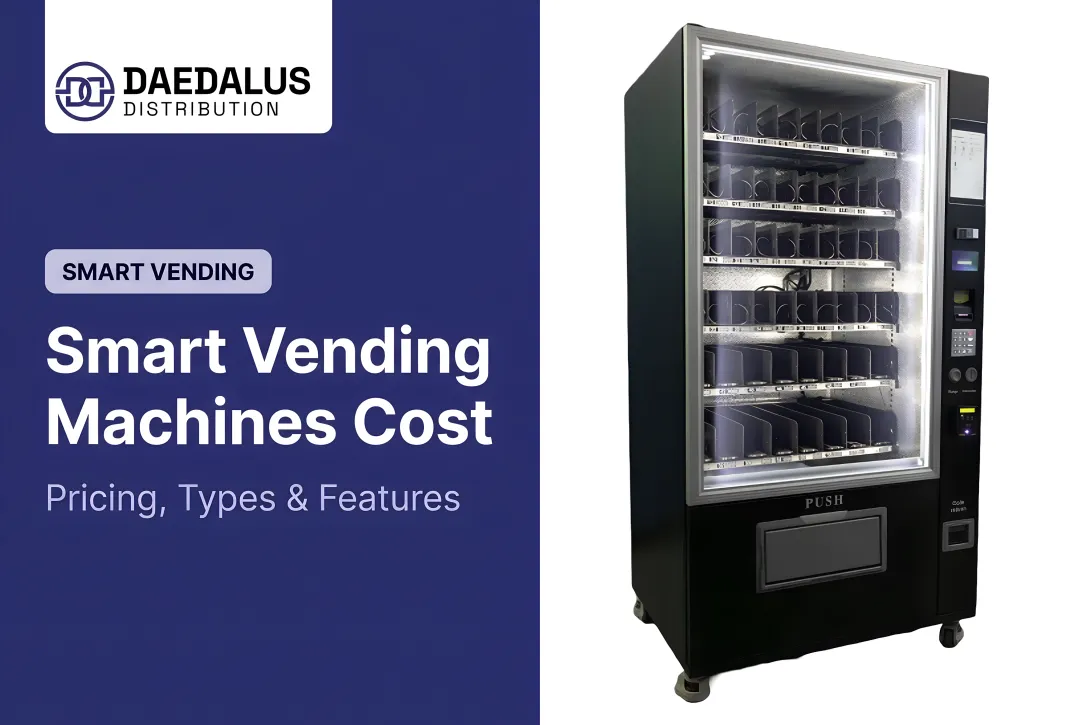
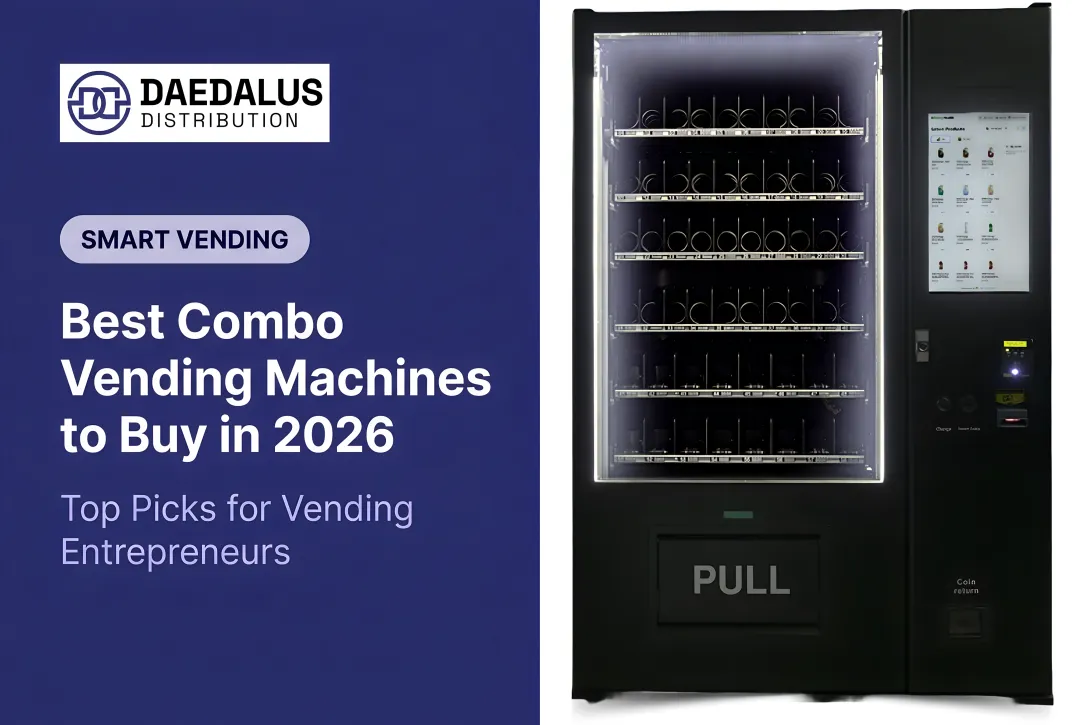
Daedalus Distribution carries Vendekin's Omnivend Combo series and Elevend Multivend in this tier. These machines are designed to generate more revenue per location by combining touchscreen merchandising with remote monitoring — so operators spend less time on-site and more time growing their route.
Best for: Operators prioritizing ROI per machine, high-traffic locations (hospitals, transit hubs, large office buildings), and businesses wanting to modernize or scale their vending operations with real sales and inventory insights.
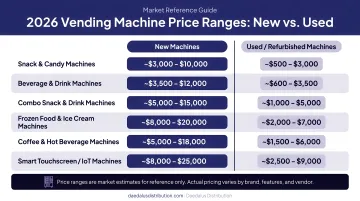
2026 Vending Machine Price Reference Table
| Machine Type | New Price Range | Used/Refurbished Price Range |
|---|---|---|
| Standard Snack Only | $2,500–$5,500 | $1,200–$2,500 |
| Refrigerated Drink/Soda | $3,000–$6,000 | $1,500–$3,000 |
| Combo (Snack + Drink) | $4,000–$8,500 | $2,000–$4,000 |
| Smart/Digital | $9,000–$30,000+ | $3,000–$6,000 |
Key Factors That Affect Vending Machine Cost
Vending machine pricing is shaped by a combination of technical specifications, operational requirements, and business context. Understanding these levers helps buyers avoid overpaying or under-specifying their equipment.
Machine Type and Configuration
Machine category is the single largest pricing variable because it dictates hardware complexity. Each type carries a different cost floor:
- Dry snack machines — lowest upfront cost; no refrigeration required
- Refrigerated drink machines — cost more due to compressor systems, insulation, and energy requirements
- Combo units — integrate snack and beverage dispensing in one footprint at a price premium
- Specialty machines — highest variability depending on product type and dispensing mechanism
Digital touchscreen machines command premiums over mechanical equivalents because they replace mechanical selectors with software interfaces, reduce moving parts, and enable advanced features like dynamic pricing and promotional displays.
Capacity and Footprint
Higher selection counts and larger product capacities increase upfront cost but reduce restocking frequency—especially important for operators managing multiple locations. A 40-selection combo machine might cost $2,000 more than a 22-selection unit, but if it doubles the time between service visits, the labor savings justify the premium.
Oversizing a machine for a low-traffic spot is a common and costly mistake. A high-capacity smart machine placed in a 20-person office generates the same revenue as a basic model at double the cost.
Technology and Payment Systems
Cashless payment integration directly impacts sales conversion and average transaction size. According to Cantaloupe's 2025 Micropayment Trends Report, cashless payments accounted for 71% of vending sales in 2024, with the average cashless transaction reaching $2.24—37% higher than the $1.78 average for cash transactions.
Machines equipped with contactless readers, mobile pay platforms (Apple Pay, Google Pay), and remote telemetry add $500–$3,000 to upfront cost but unlock higher revenue and operational efficiency through real-time inventory tracking and automated sales reporting.
New vs. Used / Condition
Used machines cost 40–60% less upfront but carry higher repair risk in year one, may lack modern payment systems, and can turn initial savings into net losses through downtime and parts costs. A $1,500 used machine without cashless capability placed in a location where 70% of customers prefer card payments will consistently underperform a $5,000 new machine.
New machines include warranties (typically 1 year on parts and labor) and current technology, but require larger capital outlay. The right choice depends on your risk tolerance and what the location realistically demands.
Brand and Build Quality
Established manufacturers command premium pricing due to component reliability and parts availability. Build quality affects long-term maintenance frequency and machine lifespan—well-maintained commercial vending machines typically last 10–15 years for snack models and 8–12 years for combo units with refrigeration. Lower-quality machines may require compressor replacement or motor rebuilds within 3–5 years, eroding the initial savings.
Full Cost Breakdown: One-Time vs. Recurring Expenses
The purchase price is only one piece of total cost of ownership. Operators who plan only for the machine sticker price often get caught off guard by ongoing costs that quietly erode their margins.
Understanding both one-time and recurring expenses upfront lets you build a realistic budget — and set accurate revenue expectations before your first machine goes live.
One-Time Costs
These are expenses you pay once, typically at the start of your operation:
- Machine purchase: $1,500–$10,000+ depending on type (snack, combo, refrigerated, smart)
- Delivery and installation: $150–$500 per machine, more for freight shipping to remote locations
- Payment system setup: Cashless card readers or kiosk terminals can add $200–$600 upfront
- Location security deposit: Some property owners require a refundable deposit before placement
- Initial product inventory: Expect $100–$400 to stock a machine for the first time
The total upfront investment for a single machine typically runs $2,000–$12,000 when all launch costs are factored in.
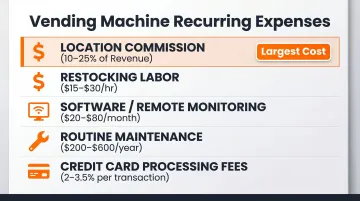
Recurring Costs
These expenses repeat monthly or quarterly and have the biggest long-term impact on profitability:
| Expense | Typical Cost |
|---|---|
| Location commission (% of sales) | 10%–25% of gross revenue |
| Restocking labor | $15–$30/hr, varies by route size |
| Software/remote monitoring subscription | $20–$80/month per machine |
| Routine maintenance and parts | $200–$600/year per machine |
| Credit card processing fees | 2%–3.5% per transaction |
Machines with remote inventory tracking — like those from Vendekin Technologies — can reduce restocking labor by flagging low stock before a wasted trip, which meaningfully cuts that recurring cost over time.
Why the Recurring Side Matters Most
A $3,000 machine with a 25% location commission and $60/month software fee will cost more to operate over three years than a $6,000 machine with a 10% commission and built-in monitoring software. The math favors lower ongoing costs, even when the upfront price is higher.
Before purchasing, calculate your total 36-month cost of ownership, not just the purchase price. That number tells the real story.