Introduction
Employees spend 8+ hours a day at work — and what they eat during those hours directly impacts their energy, focus, and performance. Yet most office break rooms still default to the same vending lineup: chips, candy, and soda. The result is predictable: mid-afternoon energy crashes, mental fog, and employees either pushing through on low fuel or leaving the office to find better options.
That behavioral pattern has a business cost. Healthy vending machines deliver measurable outcomes beyond employee wellness: reduced absenteeism, better retention rates, and productivity gains that accumulate quarter over quarter. This article breaks down the concrete advantages of healthy vending machines in the workplace, the costs of ignoring workplace nutrition, and how to make them work in practice.
Key Takeaways
- Healthy vending swaps out high-sugar, processed snacks for whole food options and low-sugar drinks that keep energy steady across the shift
- Three core business advantages: improved productivity, stronger employee retention, and reduced healthcare costs
- Skip it, and you're looking at energy crashes, rising absenteeism, and a harder time attracting talent
- Modern digital vending machines with remote inventory tracking simplify healthy restocking across single and multi-location operations
- Track purchase data, educate employees, and restock consistently to get the most from your machine
What Are Healthy Vending Machines?
Healthy vending machines are workplace vending units stocked with nutritious alternatives — protein bars, nuts, low-sugar beverages, whole-grain snacks, and fresh or refrigerated items — in place of traditional chips, candy, and soda. They operate exactly like standard vending machines, just with a different product mix.
These machines are typically placed in break rooms, lobbies, or high-traffic office areas — wherever employees are most likely to grab a quick bite. Healthy vending works best when it's treated as a practical workplace infrastructure decision, not just a wellness gesture. Modern digital vending machines — like touchscreen-enabled models with remote inventory tracking — let businesses monitor what's selling, restock proactively, and keep nutritious options consistently available.
Key capabilities that set modern healthy vending apart:
- All-digital touchscreen interfaces that accept credit cards, debit cards, Apple Pay, and Google Pay — no cash handling required
- Cloud-based management software providing real-time sales data and automated inventory alerts
- Refrigeration options for fresh meals, dairy products, and beverages in models designed for temperature-sensitive items
- Remote monitoring that enables operators to track machine performance, stock levels, and revenue from anywhere
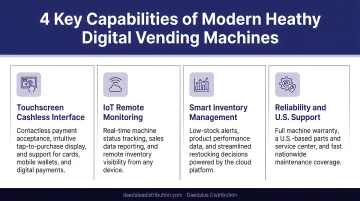
The Elevend Multivend 22, for example, is specifically designed for dairy, beverages, snacks, and fragile items — making it well-suited for office and corporate vending that includes fresh food and salads. That combination of smart hardware and real-time software is what makes healthy vending operationally viable at scale.
Key Advantages of Healthy Vending Machines in the Workplace
The advantages below connect directly to metrics that HR managers, operations leads, and business owners already track: turnover rates, sick day frequency, productivity output, and healthcare costs. Each builds on itself — the impact grows as healthy vending becomes a consistent part of the workday.
Advantage 1: Sustained Employee Energy and Productivity
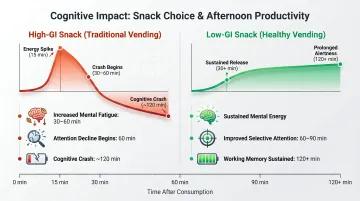
Healthy vending machines give employees access to snacks that stabilize blood sugar — foods rich in protein, fiber, and healthy fats — rather than high-sugar options that cause a spike-and-crash cycle in the mid-afternoon.
How this plays out operationally:
Employees who avoid the post-lunch energy crash maintain focus during the critical 2–4 PM window, reducing errors, improving output quality, and staying on task longer without needing a break to recover.
Why this is an advantage:
Research shows that sugar consumption significantly increases fatigue within 30 minutes (effect size g = 0.26), increasing further at 31-60 minutes (g = 0.33), while also decreasing alertness (g = -0.26). In contrast, low-glycemic-index meals result in better cognitive performance, particularly for selective attention (significant improvement 120+ minutes post-meal) and working memory. High-GI meals were associated with a significant decline in attention accuracy 2 hours after consumption.
This maps directly to the afternoon productivity window: employees consuming high-GI snacks from traditional vending machines experience measurable attention and alertness declines exactly when afternoon tasks require sustained focus. When employees are mentally sharp, fewer tasks require revisiting, fewer errors occur, and meetings run more efficiently.
KPIs impacted:
- Task completion rates
- Error rates
- Afternoon output quality
- Employee focus scores (if tracked via engagement surveys)
When this advantage matters most:
High-impact periods like quarter-end pushes, open enrollment seasons, project deadlines, or any time headcount is lean and each employee's output carries more weight.
Advantage 2: Improved Employee Retention and Employer Brand
Healthy vending machines send a clear signal to employees: the company invests in their well-being beyond salary and basic benefits. Unlike a once-a-year wellness event, a well-stocked machine is a visible, daily reminder of that investment.
How this creates an advantage:
Employees who feel cared for are more likely to stay, and job candidates — particularly younger workers — increasingly weigh wellness perks when evaluating offers. A well-stocked healthy vending machine is a low-cost, high-visibility benefit.
Why this is an advantage:
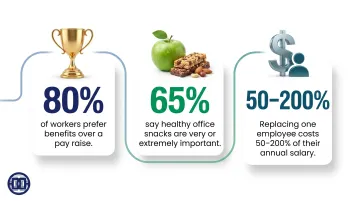
Nearly 80% of workers prefer new or additional benefits to a pay increase, with 90% of those aged 18-34 preferring benefits over pay. Additionally, 65% of employees say access to healthy snacks in the office is "very or extremely important," and 38% rank office food as one of their top three perks.
The retention math is compelling: replacing one employee costs 50% to 200% of their annual salary, depending on their level. Small investments in visible wellness infrastructure can reduce that cost over time.
Additional employer brand impact:
83% of job seekers research company reviews and ratings when deciding where to apply. Employers who boosted their Glassdoor rating by at least 0.5 points saw 20% more job clicks and 16% more apply starts on average.
KPIs impacted:
- Employee turnover rate
- Time-to-fill open roles
- Employer brand scores (Glassdoor ratings or internal engagement scores)
- Benefit satisfaction ratings
When this advantage matters most:
This advantage carries the most weight in:
- Competitive hiring markets where candidates compare total compensation packages
- Industries with high natural turnover — healthcare, retail, and manufacturing in particular
- Companies scaling headcount where retention directly affects training costs and operational continuity
Advantage 3: Lower Healthcare Costs and Reduced Absenteeism
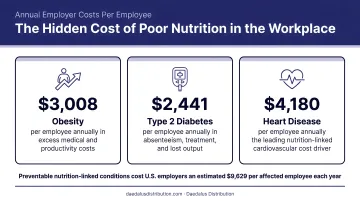
Poor workplace nutrition is a key driver of chronic health conditions — obesity, type 2 diabetes, heart disease — which drive up employer healthcare premiums and increase the frequency of sick days.
Consistent access to healthier snack options nudges employees toward better daily dietary habits, gradually reducing nutrition-related illness claims and short-term absences.
Why this is an advantage:
Productivity losses linked to absenteeism cost U.S. employers $225.8 billion annually, or $1,685 per employee. In a study of 540 employees, consuming a high-quality diet reduced the expected frequency of absenteeism by 36% — employees with high diet quality had a predicted mean of 1.9 absent days versus 3.0 days for those with low diet quality.
The CDC confirms that 75% of employer medical costs stem from preventable conditions. The nutrition-linked share of that burden is substantial:
- Obesity: ~$173 billion per year
- Diabetes: $413 billion in medical costs and lost productivity
- Heart disease and stroke: $233.3 billion in healthcare costs + $184.6 billion in lost productivity
Healthier employee populations typically result in lower group health insurance claims over time, which can directly affect premium renewal rates.
KPIs impacted:
- Sick day frequency
- Short-term disability claims
- Healthcare utilization rates
- Group health premium cost per employee
When this advantage matters most:
This advantage is most pronounced for:
- Organizations self-insuring or on group health plans where claims history directly affects renewal premiums
- Companies with large hourly or shift-based workforces where absenteeism creates immediate coverage gaps
- Businesses running lean teams where a single sick day creates cascading scheduling issues
What Happens When Healthy Vending Is Missing or Ignored
In workplaces that rely solely on traditional vending, employees default to high-sugar snacks and experience predictable energy crashes. From there, they either leave the office to find better options — costing productive time — or push through the afternoon on low fuel, and neither outcome is good for output quality.
Food obtained at work scores just 48.2 out of 100 on the Healthy Eating Index, with top calorie sources being pizza, soft drinks, cookies, and chips. Approximately 50% of working adults have access to vending machines at work — so for half the workforce, the default food environment is actively working against them.
The compounding costs show up across the business:
- Higher rates of preventable illness
- Increased sick-day frequency
- Lower engagement scores
- A weaker employer brand that makes attracting and retaining top candidates harder
There's also a perception cost. When companies ignore workplace nutrition, employees interpret it as indifference to their well-being — and that perception fuels disengagement over time. Global employee engagement fell to 20% in 2025, costing the world economy an estimated $10 trillion in lost productivity. For every 10,000 workers, struggling or disengaged employees cost an additional $20 million in lost opportunity.
In competitive markets where wellness benefits are now expected rather than exceptional, the vending machine is no longer just a convenience — it's a data point employees use to judge how much their employer actually values them.
How to Get the Most Value from Healthy Vending Machines
Healthy vending works best when applied consistently. Machines should be stocked with a rotating selection that balances:
- Protein-rich snacks (bars, nuts, Greek yogurt)
- Fiber-dense options (whole-grain crackers, dried fruit, granola)
- Hydrating beverages (low-sugar options, sparkling water)
- Choices that accommodate common dietary needs (gluten-free, vegan, low-sugar)
Inconsistent stocking undermines both employee trust and nutritional impact.
Track what's actually selling:
Outcomes improve when usage data is reviewed regularly. Modern digital vending machines — like those offered by Daedalus Distribution, which feature remote inventory tracking and sales data reporting through the Vendekin platform — give operators real-time visibility into what employees are buying. This makes it easy to remove underperforming items and expand popular healthy options without guesswork.
Then act on what you find:
Regularly update the product mix based on real purchase data, communicate available options to employees, and align vending selections with existing wellness program goals. Done consistently, this turns healthy vending from a passive amenity into a measurable part of your workplace wellness strategy.
The market data backs it up:
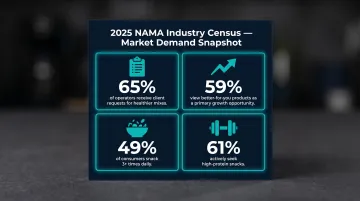
The demand for healthier workplace vending is growing fast. According to NAMA's 2025 industry census, the U.S. convenience services industry reached $31.1 billion in revenue with 8.1% annual growth. The consumer side tells the same story:
- 65% of operators now receive specific client requests for healthier product mixes
- 59% view "better-for-you" products as a primary growth opportunity
- 49% of consumers snack three or more times daily
- 61% say they actively seek snacks high in protein
Workplace vending is well-positioned to meet that demand — but only when operators manage it with intention.
Conclusion
The value of healthy vending machines in the workplace isn't theoretical — it shows up in productivity numbers, retention rates, and healthcare cost trajectories.
The advantages compound: a consistently stocked, well-managed healthy vending program builds healthier daily habits, which reduce absenteeism over quarters and improve employer brand over years. Most programs take 6–12 months to show measurable shifts in those numbers — but the gains tend to hold and build from there.
For businesses ready to act on that, the starting point is straightforward: choose machines designed for variety and uptime, stock them with intention, and track what moves. The program runs itself from there.
Frequently Asked Questions
Are healthy vending machines profitable?
Healthy vending machines can be profitable, particularly when stocked based on actual consumption data. The U.S. convenience services industry grew 8.1% annually from 2023 to 2025, with 59% of operators identifying better-for-you products as a primary growth driver and 65% reporting direct client demand for healthier mixes.
What snacks sell best in vending machines?
Protein bars, mixed nuts, granola, dried fruit, and low-sugar beverages consistently rank among the top-selling healthy vending items in workplace settings. 61% of consumers want high-protein snacks, making protein-rich options particularly strong performers alongside traditional favorites.
What is a healthy snack for office work?
Nuts and seeds, protein bars with low added sugar, whole grain crackers, Greek yogurt, and fresh fruit are all strong options for maintaining focus through the workday. These snacks sustain energy without causing blood sugar spikes and crashes.
Where to place healthy vending machines in the workplace?
High-traffic areas yield the best results: break rooms, building lobbies, near conference rooms, and at shift change points in manufacturing or healthcare environments. Positioning machines where employees already take breaks drives the most consistent usage.
What are the benefits of a healthy workplace?
A healthy workplace reduces absenteeism by up to 36%, improves focus and output through sustained energy, lowers long-term healthcare costs by addressing preventable conditions, and strengthens employee satisfaction and retention.
Do healthy vending machines exist?
Yes, healthy vending machines are widely available today. Modern units range from standard snack machines stocked with nutritious options to refrigerated smart machines offering fresh meals. Many now include digital touchscreens, cashless payment systems, and remote inventory management capabilities that make healthy vending easy to manage day-to-day.