Key Takeaways
- Supplier choice impacts machine reliability, profit margins, and long-term scalability — not just upfront cost
- Prioritize machine quality, cashless payment options, product variety, and fast maintenance response
- Look for U.S.-based parts and service support with a proven after-sales track record
- Avoid suppliers who lack pricing transparency, maintenance SLAs, or scalability support
- The right supplier grows with your business — matching your machine count, locations, and product mix as you scale
What Is a Vending Machine Supplier?
A vending machine supplier provides the physical machines, products, technology, and ongoing support needed to run a vending operation. The term covers three distinct business models — and knowing the difference shapes every purchasing decision you make.
Three Main Supplier Types:
- Machine manufacturers sell hardware directly, often with limited post-sale support
- Authorized distributors resell and support specific brands within a defined region
- Full-service vending operators manage restocking, maintenance, and day-to-day operations on your behalf
The type you choose has real operational consequences. An authorized reseller with U.S.-based parts and support infrastructure typically delivers faster response times and more accountable service than a manufacturer selling direct from overseas. When parts ship from South Carolina instead of Shanghai, your downtime drops from weeks to days.
Key Factors to Consider When Choosing a Vending Machine Supplier
Selecting a supplier requires matching technical capabilities to your actual operational needs. The right choice differs depending on whether you're starting fresh, scaling a fleet, or replacing an underperforming machine. The six factors below help buyers evaluate suppliers on metrics that drive day-to-day performance and long-term profitability — not just sticker price.
Machine Quality and Technology
Machine build quality is the foundation of a profitable vending operation. Low-quality machines lead to frequent jams, failed transactions, and costly repair cycles that erode margins over time. A single day of downtime on a high-traffic machine costs $200+ in lost revenue, so reliability directly affects your bottom line.
Modern machines worth buying share a few baseline features:
- Touchscreen interfaces that reduce mechanical button failures
- Cashless payment support: credit, debit, Apple Pay, Google Pay
- Energy-efficient components that lower operating costs
- Durable construction rated for high-traffic use
Cashless Is Mandatory:
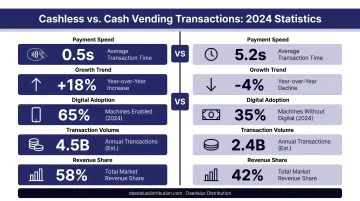
In 2024, 71% of all U.S. vending transactions were cashless, yet 25% of machines still lack this capability. The average cashless ticket was $2.24, compared to $1.78 for cash transactions — a 37% increase in consumer spend.
Product Range and Customization Options
The supplier's product catalog determines what you can actually sell. A limited portfolio restricts your ability to serve specific audiences — gyms wanting protein bars, schools requiring nut-free options, offices wanting fresh food.
What to Look For:
- Category flexibility across snacks, cold beverages, frozen goods, and dairy
- Location-based customization rather than one-size-fits-all product mixes
- Machines that support fragile and temperature-sensitive items
Locations that add just 10% more healthy SKUs see an average sales uplift of 13–15%. Beverage vending accounts for 38% of U.S. market revenue, with snacks and food at 39% — the two categories that define most operators' income.
Service, Maintenance, and Response Time
Ongoing service is the most overlooked factor in supplier selection. A machine that's down or empty generates zero revenue and damages your relationship with the host location. Yet most buyers only ask about price.
Critical Questions to Ask:
- What is the average response time for a service call?
- Do they have local technicians or ship parts from overseas?
- Is there a maintenance SLA in the contract?
SLA Benchmarks:
Most commercial vending contracts require 99.2% to 99.5% uptime, allowing only 3.65 hours of downtime per month. High-traffic locations demand 99.8% uptime with 30-minute response requirements. First SLA violations can cost $500 per location, with repeat violations jumping to $2,000 or triggering contract termination.
Pricing Structure and Financing Options
Pricing evaluation goes beyond the sticker price. Request a full cost breakdown covering:
- Upfront machine cost
- Delivery and installation fees
- Ongoing software or connectivity fees
- Cost of parts and labor for maintenance
Typical Price Ranges:
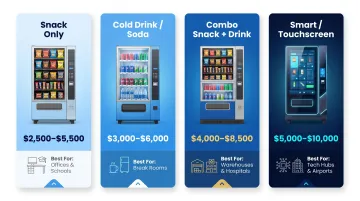
| Machine Type | Price Range | Best For |
|---|---|---|
| Snack Only | $2,500 – $5,500 | Offices, schools |
| Cold Drink / Soda | $3,000 – $6,000 | Break rooms, lobbies |
| Combo (Snack + Drink) | $4,000 – $8,500 | Warehouses, hospitals |
| Smart / Touchscreen | $5,000 – $10,000 | Tech-forward locations |
Some suppliers offer financing or lease-to-own arrangements that reduce upfront capital requirements. Watch for hidden fees or vague "service charge" language that inflates total cost of ownership.
Remote Monitoring and Data Reporting Capabilities
Smart vending suppliers provide remote inventory tracking and sales data reporting — this allows operators to know what's selling, when machines need restocking, and which products underperform, without requiring a physical site visit for every check.
Telemetry and VMS software can reduce operating costs by at least 20%. Alpha Vending reported a 17% profit increase and 27% reduction in shrinkage after upgrading to telemetry-enabled machines.
Daedalus Distribution's machines, powered by Vendekin Technologies, include remote inventory tracking and sales data reporting as standard. Operators can track inventory levels, monitor machine health, identify top-selling products, and optimize restocking routes without scheduling a site visit.
Scalability and Long-Term Partnership Potential
A supplier who can support one machine should also be able to support ten. Before committing, confirm the supplier has national reach, sufficient parts inventory, and a support model that holds up as your fleet grows.
A true long-term partner looks different from a transactional vendor:
- Proactively updates product offerings as markets shift
- Communicates new machine models and technology upgrades
- Invested in your ongoing ROI, not just closing the initial sale
The average number of machines per operator was 277 in 2023. Extra-large operators ($10M+ revenue) represent 10% of businesses but capture 65.2% of sales — scalability separates hobbyists from professionals.
Red Flags to Watch Out For When Evaluating Vending Machine Suppliers
Vague Maintenance Commitments
Avoid suppliers who use "we'll handle it" language without committing to specific SLAs, route all service requests through overseas call centers, or have no U.S.-based technicians. Response time matters: a 3-day delay in parts shipping means 3 days of lost revenue.
Pricing Red Flags
- Cannot provide a full cost-of-ownership breakdown
- Charge undisclosed software subscription fees post-purchase
- Offer unusually low upfront prices offset by high ongoing service costs
Watch for hidden fee structures in particular. Regulatory scrutiny of the vending industry has repeatedly surfaced issues around undisclosed "recurring monthly usage fees" and arbitrary integration charges — costs that don't show up in the initial quote but erode margins fast.
Technology Red Flags
- Still selling cash-only machines with no cashless payment options
- No remote monitoring capability
- No clear upgrade path as technology evolves
With 71% of transactions already cashless, a machine without payment flexibility is obsolete the day it's installed — and no remote monitoring means you won't know it's underperforming until the revenue damage is already done.
How Daedalus Distribution Can Help You Modernize Your Vending Operations
Daedalus Distribution is the authorized U.S. master reseller for Vendekin Technologies — positioned to help businesses of all sizes modernize their vending operations with all-digital, touchscreen machines backed by a U.S.-based parts and service center.
Key Differentiators:
- Access to all-digital Vendekin machines with 10-inch and 22-inch touchscreen displays, available exclusively through Daedalus in the U.S.
- Fast response and maintenance from Summerville, South Carolina with nationwide delivery
- Real-time sales data reporting built into every machine for remote inventory tracking
- Machines and software designed to maximize profitability, not just fill locations
Machine Options:
- Omnivend Combo 10 — compact 10-inch touchscreen for snacks and beverages, ideal for offices and gyms
- Omnivend Combo 22 — larger 22-inch touchscreen for high-capacity locations like schools and hospitals
- Elevend Multivend 22 — handles fragile and temperature-sensitive items including dairy, perfect for healthcare facilities
All machines include cashless payment systems (credit, debit, Apple Pay, Google Pay), cloud-based management software, and full warranty coverage.
Ready to Get Started?
Reach out to Daedalus Distribution at contact@daedalusdistribution.com or +1 843-490-2804 to learn how their vending solutions can fit your specific business goals.
Conclusion
The right vending machine supplier is the one whose machine quality, service model, product range, and technology fit how you actually plan to operate — not just how you're starting out, but where you're headed.
Choosing a supplier is a long-term partnership decision, not a one-time transaction. Review supplier performance every quarter by tracking:
- Uptime rates — are machines staying operational?
- Service response times — how fast do issues get resolved?
- Sales data trends — is revenue growing or stagnating?
The suppliers worth keeping are the ones who stay invested in your results as your operation grows.
Frequently Asked Questions
What are the key factors to consider when choosing a vending machine supplier?
The factors that matter most:
- Machine quality and technology features
- Product range flexibility
- Service and maintenance responsiveness
- Transparent pricing with no hidden fees
- Remote monitoring capabilities
- Ability to scale with your business
What sells most in vending machines?
Beverages (water, energy drinks, sodas) and salty snacks (chips, nuts, crackers) consistently top sales. Cold beverages account for 38% of U.S. market revenue, while snacks and food represent 39%. Locations adding 10% more healthy SKUs see an average sales uplift of 13–15%.
What is the difference between a vending machine supplier and a vending operator?
A supplier sells machines and provides support, while an operator actively manages machines on-site — including restocking and maintenance — on behalf of a location. A supplier sells machines and provides support, while an operator actively manages machines on-site — including restocking and maintenance — on behalf of a location. Some companies do both, but the distinction affects your level of involvement and control.
How much does it cost to get started with a vending machine supplier?
Costs vary based on machine type and technology features. New machines typically range from $2,500 to $10,000, with smart touchscreen models at the higher end. Always request a full cost-of-ownership breakdown before committing.
What type of vending machine is best for my business?
The right machine depends on location traffic, audience preferences, and available space. Snack and cold beverage machines suit most office and retail environments, while combo and fresh food machines serve higher-traffic or diverse-need locations like hospitals and schools.
How important is after-sales support when choosing a vending supplier?
After-sales support is critical — a machine that can't be serviced quickly means lost sales and damaged relationships with host locations. Prioritize suppliers with U.S.-based technicians and clear service response commitments. Downtime costs $200+ daily on high-traffic machines.