Introduction
Scroll through Facebook, attend a business expo, or check your email inbox — chances are you'll encounter another ad promising that digital vending machines are your ticket to passive income freedom. Some claim you'll earn $5,000 a month with zero effort. Others guarantee prime locations already secured for you. It all sounds appealing — until you wonder whether it's real or just another too-good-to-be-true pitch.
Digital vending machines are a legitimate business — but the industry has also attracted scam operators who exploit newcomers with inflated prices and empty promises. The two exist side by side, which makes knowing the difference critical before you invest a dollar.
This guide explains what digital vending machines actually are, whether the opportunity is legitimate, and the honest pros and cons — so you can take your first real steps without getting burned.
Key Takeaways
- Digital vending machines are a real, growing business: the U.S. smart vending market was worth $4.78B in 2022 and is projected to reach $12.99B by 2030
- Cashless-enabled machines drive 37% higher transaction values than cash-only units, though upfront investment starts around $12,000 per machine
- Supplier legitimacy is everything: verify company history, transparent pricing, and U.S.-based support before committing
- Location quality determines success — hitting $100K gross revenue typically takes 10-20 well-placed machines
What Is a Digital Vending Machine?
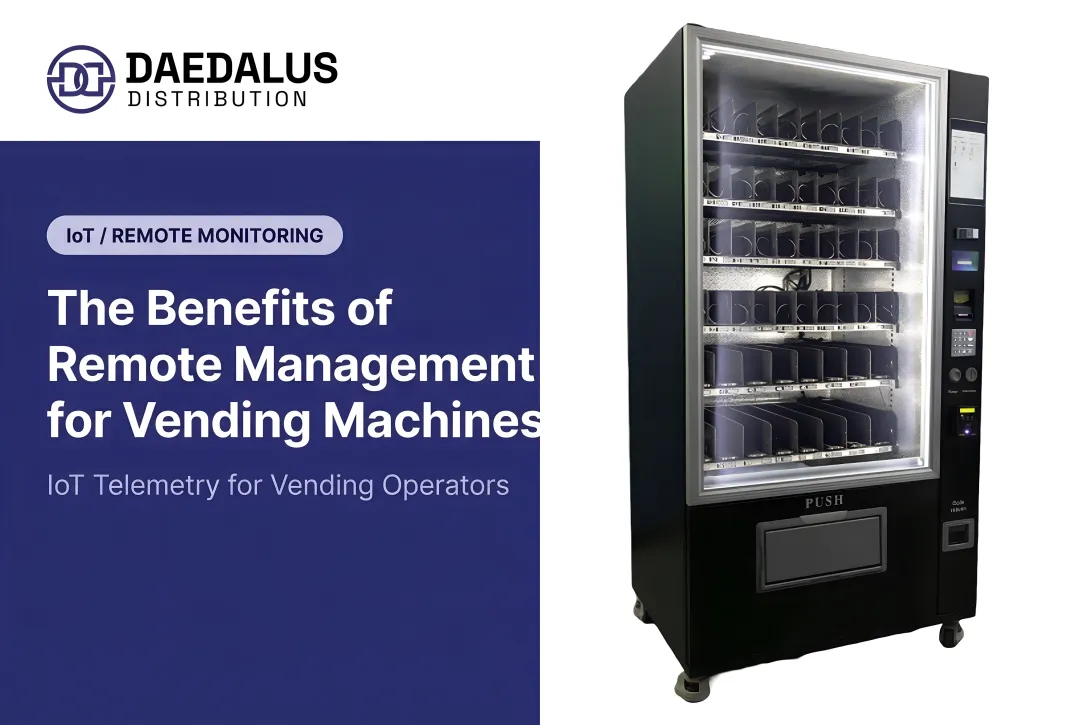
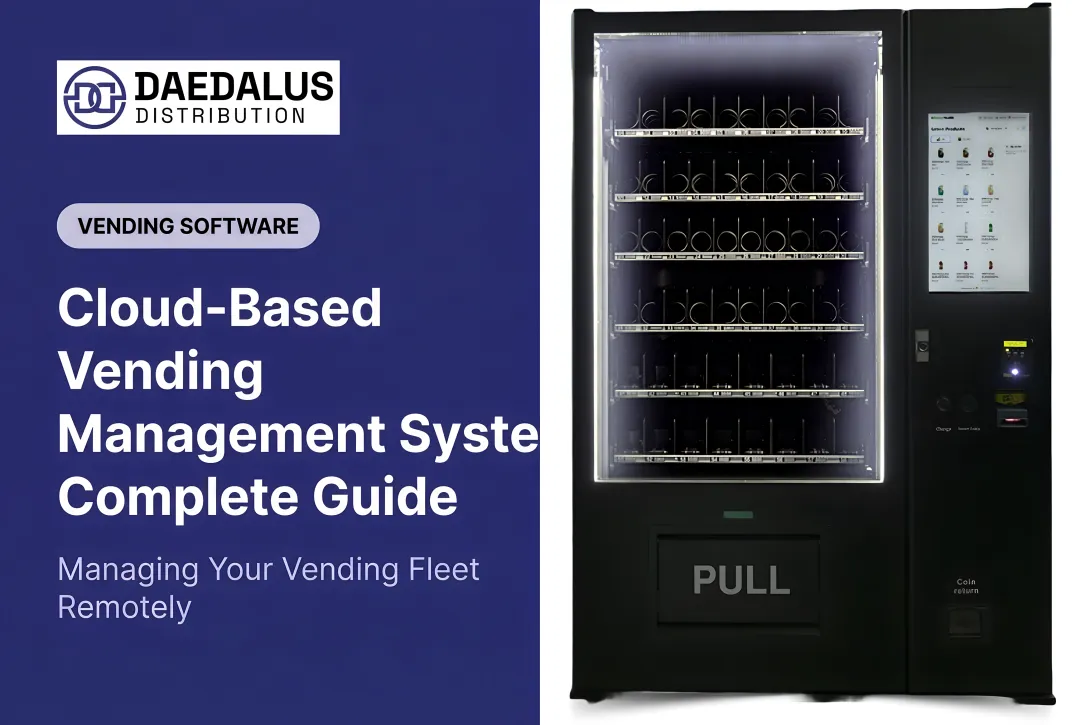
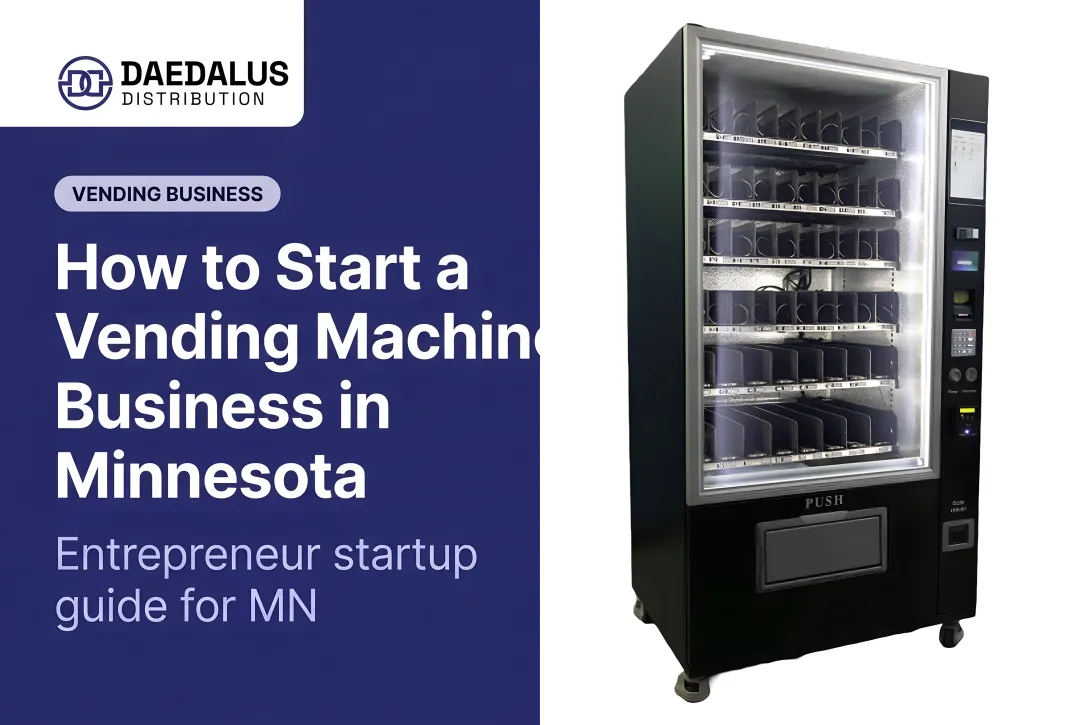
A digital vending machine — often called a "smart" vending machine — is a modern alternative to traditional coin-operated equipment. These units feature touchscreen interfaces (typically 10" to 22" displays), cashless payment systems that accept credit cards, debit cards, Apple Pay, and Google Pay, and cloud-connected software that lets operators monitor sales and inventory remotely. They're primarily used to dispense snacks, beverages, frozen goods, and similar products.
Three things separate digital machines from their older counterparts:
- Fewer mechanical failures — simpler dispensing systems replace the jam-prone coil mechanisms common in legacy units
- Flexible payment acceptance — credit cards, debit cards, and mobile wallets with no cash handling required
- Remote inventory visibility — real-time stock and sales data accessible from your phone, so you're not driving to a location just to check if it needs restocking
The term "digital vending machine" covers a spectrum. On one end, you'll find basic machines equipped with cashless readers but limited connectivity. On the other, fully AI-driven smart coolers with advanced analytics and customer behavior tracking. This guide focuses on the mid-range category most popular in the U.S. market: touchscreen-equipped, cloud-connected machines that offer practical features for independent operators without the overhead of enterprise-level systems.
Are Digital Vending Machines a Legit Business Opportunity?
Yes, digital vending machines are a legitimate business. The U.S. retail vending machine market was valued at $15.02 billion in 2024, with thousands of professional operators running successful routes. The intelligent vending sub-segment alone generated $4.78B in 2022 and is projected to reach $12.99B by 2030 at a 14% CAGR — more than four times faster than the overall vending industry's 3.2% growth rate.
Why the "scam" reputation exists
The vending industry's legitimacy problem doesn't stem from the machines themselves — it comes from unethical business-opportunity marketers. These operators run high-pressure seminars, direct-mail campaigns, and flashy online ads promising guaranteed locations and passive income, then charge grossly inflated prices for low-quality machines. Buyers discover too late that the "prime locations" don't exist, the machines break down constantly, and the numbers never worked from the start.
The Federal Trade Commission has pursued multiple vending fraud cases over the years, resulting in combined judgments exceeding $49 million. Common tactics include phony references, fake earnings claims, and location guarantees that vanish after payment.
Hallmarks of a scam operation
- Creates false urgency with "sign before you leave" or "limited spots available" pressure
- Promises pre-placed, high-traffic locations with guaranteed revenue
- Lacks a physical address, real support team, or parts infrastructure
- Prices machines far above legitimate market rates
- Offers references you can't independently contact or verify
Hallmarks of a legitimate supplier
- Established business history — verifiable U.S. presence with physical location and operating history
- Transparent pricing — costs comparable to market rates, with clear explanations of what's included
- Real service infrastructure — U.S.-based parts center, technical support, and warranty coverage
- Honest projections — realistic ROI estimates without guaranteed returns
- Genuine references — willingness to provide real customer contacts you can verify independently
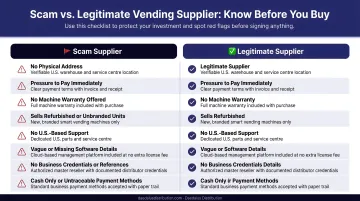
For example, Daedalus Distribution operates as the authorized U.S. master reseller for Vendekin Technologies — with a physical service center at 3208 Mill Street, Summerville, SC, published support contacts, and machines sold on their technical and operational merits.
Vet Before You Buy
The machine technology is proven. The risk lies in who you buy from and whether your location volume justifies the investment. Vet suppliers rigorously, demand documentation required under the FTC Business Opportunity Rule, and never pay upfront without verifying every claim.
The Pros of Digital Vending Machines
24/7 passive revenue potential
Machines generate sales around the clock without requiring your physical presence. Unlike most businesses that close at night or on weekends, a well-placed vending machine continues earning while you sleep. This makes vending one of the few genuinely semi-passive business models available to independent operators — though "semi-passive" is the critical qualifier, since you'll still need to restock, maintain equipment, and manage locations.
Cashless payments drive higher sales
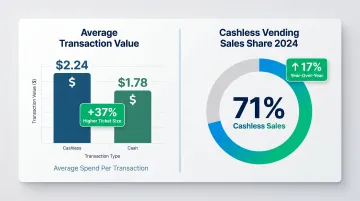
By accepting credit cards, debit cards, and mobile wallets, digital machines capture purchases that cash-only machines lose. The impact is measurable: Cantaloupe's 2025 Micropayment Trends Report found cashless transactions averaged $2.24 versus $1.78 for cash — a 37% higher ticket size. When consumers don't need exact change, they spend more per visit.
71% of all vending sales were cashless in 2024, up 17% from the prior year. This trend isn't slowing down — machines without cashless capability are increasingly left behind.
Remote inventory tracking and data reporting
Cloud-connected machines give operators real-time visibility without unnecessary service trips. From your phone, you can:
- Monitor stock levels across every location
- Track which products sell best at each site
- Receive low-inventory alerts and plan efficient restocking routes
- Identify out-of-stock periods that cost sales before they compound
Daedalus Distribution machines include built-in remote tracking and sales reporting as standard — no separate software license required.
Fewer mechanical failures
Digital vending machines replace jam-prone coil mechanisms with simpler dispensing systems, reducing the most common source of lost sales and service calls in traditional vending. Elevator-style systems and product delivery sensors ensure items actually drop, minimizing the customer frustration and refund requests that plague older equipment.
Each additional machine adds revenue without adding proportional labor
Once a first machine proves profitable, the operational model is repeatable. Operators can expand their route incrementally, with each additional machine adding revenue without proportionally adding labor. A 10-machine route doesn't require 10 times the work of a single machine — restocking becomes more efficient, vendor relationships improve with volume, and your time investment grows more efficient with every machine added.
The Cons of Digital Vending Machines
Higher upfront investment
Digital machines cost more than basic mechanical vending equipment — often by a wide margin. According to publicly available pricing from U.S. manufacturer Digital Media Vending International, touchscreen smart vending machines start at $11,995 to $14,495 per unit for full-featured models with cashless payments and remote monitoring. Wall-mounted entry-level units begin around $4,595, but offer limited capacity and features.
This upfront cost creates a real barrier to entry. Unlike low-cost side hustles you can test with a few hundred dollars, vending requires substantial capital before you see your first sale.
Location dependency is critical — and not guaranteed
A digital machine in a low-traffic location will not generate enough revenue to cover its costs. Success depends entirely on securing the right placements — offices, gyms, apartment complexes, warehouses, manufacturing facilities — with sufficient foot traffic and a customer base that values convenience.
Finding and securing those placements takes real sales effort. Property managers and business owners receive vending pitches regularly, so you'll need to demonstrate value, negotiate commission splits, and sometimes compete against established operators with existing relationships. Scam operators promise this work is already done — legitimate businesses know otherwise.
Internet connectivity requirement
Cashless payments, remote monitoring, and over-the-air software updates all depend on a stable internet connection. Machine placement in areas with poor Wi-Fi or cellular coverage can limit functionality and require additional setup costs. While most commercial locations offer adequate connectivity, warehouses, basements, or remote facilities may present challenges.
Ongoing operational costs add up
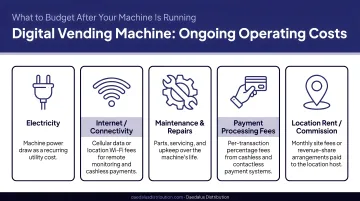
Beyond the machine purchase, these recurring costs directly affect your bottom line:
- Product restocking — wholesale snack and beverage costs, plus the time and fuel to deliver inventory
- Payment processing fees — credit card processors charge per-transaction fees (rates vary by provider and are typically negotiated individually)
- Location commissions — many hosts expect 10-25% of gross sales as rent for the space
- Machine maintenance — occasional repairs, replacement parts, and routine cleaning
- Insurance and business costs — liability coverage, business registration, and accounting
The industry average annual sales per machine was $6,284 in 2023 — and after restocking, commissions, and fees, most operators net a fraction of that figure. Modeling your costs before you buy is essential.
How to Start a Digital Vending Machine Business
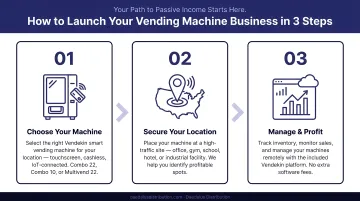
Step 1 — Validate your locations before you buy
The biggest beginner mistake is purchasing machines before securing locations. Without confirmed placements, equipment sits idle while you scramble for locations — and operators in that position tend to accept poor spots that never generate enough revenue.
Start by identifying high-traffic locations in your area — office buildings, gyms, apartment complexes, manufacturing plants, hospitals, or schools. Reach out to decision-makers with a simple pitch: convenient food and beverage access for their staff or tenants, maintained at no cost to them.
Get verbal or written location agreements before committing to machine purchases. Even informal commitments ("Yes, we'd be interested in a snack machine in our break room") give you the confidence to invest. Professional operators often secure 3-5 location commitments before buying their first machine.
Step 2 — Vet and purchase from a verified supplier
Work with an authorized, U.S.-based distributor with a real service infrastructure — not a business-opportunity marketer. Verify the supplier against the FTC Business Opportunity Rule, which requires sellers to provide disclosure documents at least seven days before any payment, including litigation history, refund policies, and at least 10 purchaser references.
When evaluating suppliers, look for a verifiable U.S. address, responsive weekday support, and machines that include remote inventory tracking and cashless payment as standard — not paid add-ons. Daedalus Distribution, the authorized U.S. master reseller for Vendekin Technologies, is one example of a supplier built around these criteria, with U.S.-based parts availability and dedicated operator support.
Request detailed pricing, ask about warranty coverage, and confirm what post-sale support is included. Legitimate suppliers will answer these questions transparently.
Step 3 — Set up your business structure and operations
Three operational foundations matter most when you're starting out:
Register your business. Forming an LLC isn't legally required in most states, but it provides liability protection and professional credibility when approaching location hosts. Consult a business attorney or accountant to pick the right structure.
Nail your product margins. Establish wholesale accounts with snack and beverage distributors. Calculate your cost of goods sold (COGS) so your pricing covers location commissions, payment processing fees, and restocking costs — with profit left over.
Use your machine's remote dashboard from day one. Track which products sell best at each location, monitor inventory to avoid stockouts, and adjust your restocking schedule based on actual sales patterns. Operators who use this data consistently outperform those who restock on gut feel.
Frequently Asked Questions
What is a digital vending machine?
A digital vending machine is a connected, touchscreen-equipped unit that accepts cashless payments (credit cards, Apple Pay, Google Pay) and allows operators to monitor inventory and sales remotely via cloud software. Unlike traditional coin-operated machines, digital models provide real-time data, eliminate mechanical jams, and capture higher transaction values by accepting multiple payment types.
Are digital vending machines worth it?
They can be worth it for operators who secure high-traffic locations and buy from reputable suppliers at fair market prices. However, they require real business effort — location scouting, sales negotiations, inventory management, and route maintenance. Digital vending is not a passive "set and forget" investment.
How many vending machines do you need to make $100k?
Using the industry average of $6,284 in annual sales per machine, reaching $100,000 in gross revenue requires approximately 16 machines. Well-placed machines in high-traffic manufacturing or corporate locations could reduce this to 10-12 units, while lower-traffic sites might require 20 or more. Keep in mind this is gross revenue — net profit will be much lower after product costs, commissions, and operating expenses.
Do I need an LLC for a vending machine business?
While not legally required in most states, forming an LLC is generally recommended for liability protection and professional credibility when approaching location hosts. An LLC protects personal assets from business-related lawsuits or debts, which matters when you're placing physical equipment in third-party locations where accidents could occur.
How much does a digital vending machine cost?
Full-featured commercial-grade models with touchscreen, cashless payment, and remote monitoring typically range from $11,995 to $14,495 per unit. Entry-level wall-mounted units start around $4,595 but have limited capacity. Any seller pricing a full-featured machine under $3,000 is a red flag — low prices often signal poor quality or fraud.
What are the most common digital vending machine scams?
Common red flags: high-pressure "act now" seminars, promises of pre-placed locations with guaranteed revenue, no verifiable U.S. address, and machines priced far above market value. FTC enforcement actions have repeatedly identified fake earnings claims and location fraud as core tactics — always demand FTC Business Opportunity Rule disclosures and verify all claims independently before paying.