The numbers back this up. According to NAMA's 2022–2023 Industry Census, micro markets grew from just 2% of U.S. convenience services revenue in 2014 to 20% in 2023, with revenue increasing 41% annually since 2020. That's not a niche trend — it's a structural shift.
For entrepreneurs, small business owners, and existing vending operators, micro markets represent a recurring revenue opportunity with real scalability. But they're not passive income from day one. Success requires the right location, honest startup planning, and systems that make operations manageable as you grow.
This guide walks through everything — from validating your first location to launching, monitoring, and scaling a profitable micro market business.
Key Takeaways
- Micro markets are open-shelf, self-checkout setups that outperform traditional vending in average transaction value, product range, and shopper experience.
- The three pillars of profitability: right location, right product mix, and efficient restocking systems.
- Startup costs vary significantly by market size and equipment tier, so model your numbers with real supplier quotes before committing.
- Validate demand, model unit economics, and let sales data guide decisions before you scale.
What Is a Micro Market Vending Business?
A micro market is an unattended retail environment where customers browse products on open shelving and in refrigerated coolers, then pay at a self-checkout kiosk — no staff, no vending slots, no coin mechanisms. NAMA defines micro markets as exactly this: open product engagement, cashless self-checkout, operating 24/7 in a fixed location.
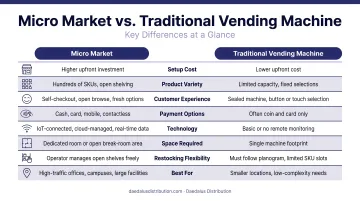
How It Differs from Traditional Vending
Three differences stand out immediately:
- Product range: Micro markets carry hundreds of SKUs — snacks, beverages, fresh meals, and non-food items — compared to the tens of products a standard vending machine holds.
- Customer experience: Shoppers can physically pick up, read labels, and choose products rather than selecting from a grid of photos.
- Transaction size: Customers tend to buy more per visit. Cantaloupe's 2023 transaction data shows consumers spent 33% more at micro markets than traditional vending machines, with a projected 2024 average ticket of $3.19.
Two Ways to Operate
That broader product range and higher ticket value translates directly into which operating model makes sense for you. Most operators fall into one of two:
- Owner-operated — one to a few locations, hands-on restocking, direct supplier management
- Scaled operations — multiple locations with route drivers, remote management software, and systemized restocking
Both are viable. Most operators start with a single location to validate margins, refine restocking schedules, and build the systems that make scaling repeatable.
What to Know Before You Start
Many new operators underestimate what the first 6–12 months actually require — here's an honest picture before you commit capital.
Time and Labor
Regular restocking visits are non-negotiable — frequency depends on foot traffic and location size. Add time for supplier coordination, accounting, and handling equipment issues. Early-stage management demands consistent attention until operations settle into a routine.
Shrink and Theft Risk
The open-shelf format introduces loss that enclosed vending machines don't have. Vending Market Watch research reports that most operators experience 3% to 7% shrink, with a 4% average cited in a 2025 industry survey. Budget for this from the start — security cameras and access controls aren't optional extras.
Break-Even Timeline
Break-even depends on your startup investment and location revenue. It can range from several months to over a year. Research current operator benchmarks and build your own projection based on actual site traffic and cost estimates — don't rely on generic claims.
Tech Dependency
Modern micro markets run on software: kiosk systems, cashless payments, and inventory management. Operators using platforms like the Vendekin system (offered through Daedalus Distribution) get built-in remote inventory tracking and sales reporting included with their machines at no separate license fee. That said, you still need to be comfortable using these tools or willing to invest time learning them.
Why Micro Markets Make Sense (When Conditions Are Right)
Not every location justifies a micro market. The model works best where foot traffic is consistent, startup capital is available, and the goal is recurring revenue — not a quick return.
The Business Case
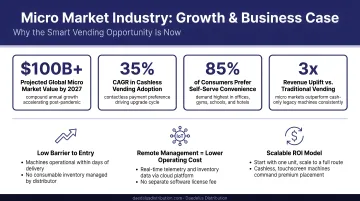
- NAMA projects the convenience services industry will exceed $40B by 2028, with micro markets as the primary growth driver.
- Closed-loop environments — offices, manufacturing plants, residential buildings — deliver a captive audience that returns daily, with no marketing spend needed.
- Transaction values run roughly 33% higher than traditional vending, and that gap compounds fast across hundreds of daily visits.
- Systems, supplier relationships, and route processes built at your first location transfer directly to every location after it.
That said, the model rewards preparation. Operators who understand the upfront costs, compliance requirements, and ongoing operational load from the start are the ones who scale it successfully.
How to Start a Micro Market Business – Step by Step
Executing in the right order prevents wasted investment. Here are the five phases.
Step 1 – Choose a Location and Validate Demand
Location is the single biggest variable in micro market profitability. Forget generic employee-count minimums — what matters is foot traffic quality, site access, shift coverage, and how close (or far) alternative food options are.
Strongest location types:
- Manufacturing and distribution facilities
- Large office buildings and corporate campuses
- Hotels and hospitality properties
- Hospitals and healthcare facilities
- University buildings
- Residential apartment complexes
Prioritize sites with consistent daily occupancy and limited food alternatives within walking distance.
Before signing anything, validate:
- Meet with the facility manager — confirm genuine interest in hosting a market
- Estimate daily foot traffic and peak usage hours
- Understand whether the space has power, refrigeration access, and security infrastructure
- If possible, test demand with a small vending presence before committing to a full build-out
Operators who skip this step often find themselves cash-flow negative for 6–12 months with no clear path to breakeven.
Step 2 – Define Your Business Model and Startup Costs
How the money works:
Operators typically own the equipment and inventory, negotiate a placement agreement with the host location (structures vary — revenue share, flat fee, or no charge in exchange for the convenience service), and keep product sales revenue.
Startup cost categories to budget for:
- Self-checkout kiosk and POS hardware
- Refrigerated coolers and freezers
- Open shelving and fixtures
- Initial inventory
- Security cameras
- Software (note: with Vendekin-powered machines from Daedalus Distribution, management software is included at no separate license fee)
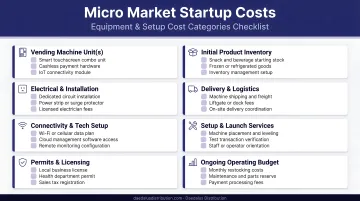
Component pricing varies by supplier and market size. Cantaloupe's store lists refrigerated coolers ranging from roughly $1,795 to $4,295 per unit — and a market typically needs multiple coolers. Get actual quotes rather than working from estimates.
Build a simple unit economics model:
Estimated daily transactions × average basket size × gross margin = monthly gross profit Subtract: restocking labor + product cost + any software or service fees = net profitability
Run this at a few different traffic scenarios (conservative, moderate, optimistic) before committing.
Step 3 – Handle Legal, Compliance, and Business Setup
Business formation:
- Register as an LLC or appropriate legal entity
- Obtain a general business license
- Open a dedicated business bank account
- Set up basic bookkeeping from day one
Food compliance catches most new operators off guard. Requirements vary significantly by state — FDA guidance directs operators to their local health departments for applicable permits.
Two examples of what that looks like in practice: Iowa requires an "Unattended Food Establishment License" for packaged-food self-service operations; Oklahoma has formal rules covering plan review, inspections, and license issuance. Check your state's requirements before selling any perishables.
Insurance and suppliers:
- Secure a general liability insurance policy (the SBA recommends this for any business)
- Establish wholesale distributor accounts for snacks, beverages, and fresh food
- Confirm delivery minimums and lead times before launch — improvising supplier logistics after opening creates stockouts and missed sales during your highest-visibility period
Step 4 – Build Out Your Market Setup and Product Strategy
Equipment choices matter: Invest in a reliable self-checkout kiosk with full cashless capabilities — credit, debit, Apple Pay, Google Pay, and tap-to-pay. Machines in the Vendekin lineup (distributed by Daedalus Distribution) include built-in remote inventory tracking and automated sales reporting alongside cashless payment processing, cutting manual oversight significantly.
For locations requiring fresh food and temperature-sensitive items, the Elevend Multivend 22 is particularly worth considering — its elevator dispensing system handles fragile and refrigerated products without damage.
Product mix strategy:
Start with 100–200 SKUs and expand based on actual sales data. Consistent top-performers across location types:
- Cold beverages (highest volume category)
- Packaged snacks
- Fresh meals and sandwiches (especially in office and healthcare environments)
- Health-focused options (protein bars, salads)
- Non-food convenience items (pain relievers, phone chargers) in residential and office settings
Layout for purchasing behavior:
- Eye-level shelves: high-margin, high-turnover items
- Near-kiosk: impulse items — gum, candy, single-serve snacks
- Grouped together: complementary items (sandwich + drink, coffee + pastry)
Don't over-stock at launch. Too many SKUs increases spoilage, ties up working capital, and makes your first restocking run far more complicated than it needs to be.
Step 5 – Launch, Monitor, and Scale
At launch:
- Coordinate with the facility manager for a staff or resident announcement
- Put up clear signage explaining how to use the kiosk
- Offer a simple opening promotion — a discounted item or loyalty credit drives initial trial
First 60–90 days — focus on data:
Use your remote management tools actively during this period. The Vendekin platform provides real-time sales tracking and inventory alerts, letting you identify top-selling products, spot shrink patterns, and optimize restock schedules without guesswork. This early data is the most valuable input you'll have for making the market consistently profitable.
Track specifically:
- Which products are selling vs. sitting
- Restocking frequency per product category
- Shrink rates against your projected 4–7% budget
- Average transaction size versus your model assumptions
Stabilize before scaling:
Confirm that product margins, shrink levels, and restocking efficiency are within acceptable ranges before signing agreements for new locations. The supplier relationships, restocking routes, and product mix you dial in at location one transfer directly to every location after — so get them right first.
Conclusion
A profitable micro market business is achievable, but it rewards preparation over impulse. The operators who do well start with a validated location, understand their full cost structure before buying equipment, and invest in tools that give them data rather than guesswork.
Long-term profitability comes from treating each location as a managed asset — reviewing sales data regularly, adjusting the product mix, maintaining equipment, and using what you learn at one site to improve the next.
The fundamentals that separate successful operators from struggling ones come down to a short list:
- Start with a validated, high-traffic location before committing to equipment
- Know your break-even point and margin per transaction before you stock a single item
- Use sales data to drive restocking and product mix decisions — not habit
- Maintain equipment consistently; downtime is lost revenue and lost trust
- Apply what works at one site deliberately when adding the next
Build that foundation first. Scale follows naturally from there.
Frequently Asked Questions
How much does it cost to start a micro market vending business?
Startup costs include a self-checkout kiosk, refrigerated coolers, shelving, initial inventory, and security cameras. Costs vary based on market size and equipment choices — a single cooler can run $1,800 to $4,300+, and most setups require multiple units. Get actual supplier quotes before planning a budget.
How profitable is a micro market compared to a traditional vending machine?
Micro markets generate meaningfully higher revenue per location — customers spend an average of 33% more per transaction than at traditional vending machines, and the larger product selection drives higher overall volume. Exact profitability depends on location quality, product mix, and how well shrink is controlled.
What locations work best for a micro market vending business?
Manufacturing facilities, office buildings, corporate campuses, hospitals, hotels, and residential apartment complexes are the strongest performers. The key variables are consistent daily foot traffic, limited nearby food alternatives, and a secure environment that naturally reduces shrink risk.
How do you prevent theft in a micro market?
Security cameras with visible placement are the primary deterrent. Pair these with inventory reconciliation software that flags discrepancies between expected and actual stock. Closed-loop environments — offices, manufacturing facilities — reduce shrink naturally because the user population is known and accountable.
How many products should a micro market carry?
Start with 100–200 SKUs and expand based on sales data. Cold beverages, snacks, and fresh items are consistent top-sellers across location types. Over-stocking at launch creates waste and cash flow strain — expand the range only once purchase patterns are clear.
How long does it take to break even on a micro market investment?
Break-even depends on your startup investment and location revenue — there's no universal timeline. Build your projection from actual site estimates and vendor quotes; industry averages rarely reflect what a specific location will generate.