Key Takeaways
- Combo snack/beverage and coffee machines generate the highest margins per square foot, driven by high transaction volume and strong per-unit markups
- Four factors drive profitability: machine type, product markup (typically 40-60%), location foot traffic, and operating costs
- Expect to invest $3,000-$10,000 for standard machines or $15,000-$25,000 for smart digital units — payback speed depends heavily on location quality
- Cashless payment and remote monitoring are now baseline requirements — 86% of U.S. consumer payments in 2024 were non-cash
- The most profitable machine is the one that fits your specific location, customer base, and management capacity
The Vending Machine Business Opportunity in 2025
The U.S. vending industry generated $18.2 billion in revenue in 2023, representing 68% of the broader convenience services industry, according to the NAMA Foundation 2022-23 Industry Census. The industry is projected to grow at a 4.8% compound annual growth rate (CAGR) through 2028, supporting over 165,300 jobs nationwide.
Why vending appeals to small business owners:
- Low startup costs — standard machines run $3,000-$10,000, compared to six-figure costs for most brick-and-mortar retail
- One operator can manage multiple locations remotely, without hiring staff
- Scalable from day one — test a single machine before committing to a full route
- Machines generate revenue around the clock with minimal active management
Machine types now range from classic snack dispensers to frozen food units and smart digital kiosks — and that choice directly shapes your margins. The 10 types below represent the strongest ROI potential for small business operators in 2025, ranked by factors like average monthly revenue, placement accessibility, and product demand.
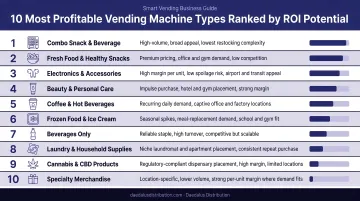
Top 10 Most Profitable Vending Machines for Small Business Owners
These 10 machine types were evaluated on profit margin potential, startup cost accessibility, product demand consistency, and ease of operation for independent small business owners. These 10 machine types were evaluated on profit margin potential, startup cost accessibility, product demand consistency, and ease of operation for independent small business owners. The list moves roughly from lowest-complexity entry points to more specialized or technology-forward options.
1. Snack Vending Machines
The most widely deployed vending machine category. Snack machines appeal across all demographics, require no refrigeration, and offer simple placement and maintenance—ideal for new operators.
- Low product acquisition cost with consistent 40-60% markup
- High restocking flexibility (seasonal products, healthy options, local snacks)
- Lowest barrier to entry for machine cost and location negotiation
| Category | Details |
|---|---|
| Typical Machine Cost | $3,000 - $10,000 |
| Estimated Gross Margin | 40-60% |
| Best Locations | Offices, schools, hospitals, gyms, break rooms |
2. Combo Snack + Beverage Vending Machines
The highest-revenue single-unit option for most operators. Combo machines dispense snacks and cold drinks in one cabinet, eliminating the need for two machines and maximizing revenue per square foot.
- Higher average daily transaction count than single-category machines
- Appeals to the broadest range of customers in any location
- Modern combo units with touchscreen and cashless payment consistently outperform legacy models
| Category | Details |
|---|---|
| Typical Machine Cost | $3,000 - $6,200+ |
| Estimated Gross Margin | 40-60% |
| Best Locations | Office buildings, apartment complexes, gyms, transit hubs, university common areas |
3. Cold Beverage Vending Machines
Dedicated cold drink machines stock sodas, water, juices, and energy drinks. High transaction frequency is driven by habitual daily purchases, especially in warm-weather markets and high-activity locations.
- Beverages carry strong per-unit margins—bottled water can achieve up to 86% gross margin
- Captive audience locations like sports venues or outdoor parks drive volume with minimal competition
- Low restocking complexity compared to fresh food
| Category | Details |
|---|---|
| Typical Machine Cost | $4,000 - $10,000+ |
| Estimated Gross Margin | 40-60% (water up to 86%) |
| Best Locations | Parks, sports venues, outdoor recreation areas, schools, hotel lobbies |
4. Coffee & Hot Beverage Vending Machines
One of the highest-margin categories per dispensed unit. A single cup of vended coffee can yield 3-5x the margin of a packaged snack. Demand is consistent in office and transit environments year-round.
- Low restocking volume relative to revenue generated
- Premium pricing is accepted by customers accustomed to café pricing
- Compact tabletop models allow placement in smaller spaces
Approximately 70% of coffee vending machines globally are deployed in office environments, yet less than 18% of offices currently have coffee vending machines. That gap represents a real placement opportunity for new operators.
| Category | Details |
|---|---|
| Typical Machine Cost | $9,600+ (full-size); tabletop units typically lower |
| Estimated Gross Margin | 200%+ per cup (vend price 3x+ ingredient cost) |
| Best Locations | Offices, hotels, hospitals, airports, university buildings |
5. Fresh Food & Healthy Meal Vending Machines
Salads, sandwiches, wraps, and protein-focused meals dispensed at premium prices. Strong growth is driven by health-conscious consumers and gaps in food service coverage.
- Higher average ticket price per transaction compared to snack or beverage machines
- Serves genuinely underserved locations where traditional foodservice is absent or inconvenient
- 53% of vending operators increased "better for you" product offerings in the past year
The global fresh food vending machines market is expected to reach USD 1.78 billion in 2025, growing to USD 2.60 billion by 2033 at a 4.7% CAGR.
| Category | Details |
|---|---|
| Typical Machine Cost | $4,000 - $6,000+ (requires specialized refrigeration) |
| Estimated Gross Margin | 30-45% (lower than snacks due to higher COGS but offset by higher ticket prices) |
| Best Locations | Hospitals, manufacturing plants, university campuses, fitness centers, corporate offices |
6. Frozen Food & Ice Cream Vending Machines
Dispenses frozen meals, ice cream bars, and frozen snacks. Lower market saturation than snack/beverage means less price competition and easier location placement.
- High ticket size per transaction
- Strong impulse purchase appeal
- Summer demand spikes can lift monthly revenue noticeably
- Expanding category with heat-and-eat meal options
| Category | Details |
|---|---|
| Typical Machine Cost | $4,295 - $5,699 |
| Estimated Gross Margin | Moderate COGS offset by lower spoilage risk than fresh food |
| Best Locations | Shopping malls, schools, sports facilities, corporate cafeterias, amusement parks |
7. Personal Care & Beauty Vending Machines
Dispenses cosmetics, skincare, hair accessories, and hygiene products. A high-margin niche with limited operator competition compared to food and beverage categories.
- Beauty and personal care products routinely sell at 3-5x wholesale cost
- Impulse and emergency purchase behavior drives transactions in captive audience locations
- Minimal refrigeration or power requirements
The U.S. beauty and personal care retail vending machine market is valued at USD 91.6 million in 2025 and is projected to reach USD 303.5 million by 2035 at a 10.5% CAGR.
| Category | Details |
|---|---|
| Typical Machine Cost | Varies by machine size and features |
| Estimated Gross Margin | 50-80% (reflecting high retail markups plus convenience premium) |
| Best Locations | Airports, hotel lobbies, shopping malls, gyms, spas, convention centers |
8. Electronics & Accessories Vending Machines
Phone chargers, earbuds, cables, portable batteries, and travel accessories dispensed in high-need, captive-audience environments. Among the highest revenue-per-transaction categories in vending.
- Low restocking frequency relative to revenue
- Customers with dead phones or missing chargers are far less concerned about price, supporting strong margins
- Limited competition in most placement locations
Tech vending machines benefit from strong impulse purchase behavior, particularly among travelers who forget essential accessories. Premium placement environments like airports and hotels correlate with higher willingness to pay, supporting stronger price points.
| Category | Details |
|---|---|
| Typical Machine Cost | Custom configurations typically required (locker-style or elevator delivery) |
| Estimated Gross Margin | High due to emergency purchase behavior and convenience premium |
| Best Locations | Airports, hotels, convention centers, university campuses, co-working spaces |
9. PPE & Health Essentials Vending Machines
Masks, sanitizers, OTC medications, first aid supplies, and wellness items. Institutional demand creates consistent placement opportunities with long-term contract potential.
- In regulated industries, PPE access is a compliance requirement—not an optional amenity
- Creates guaranteed, recurring demand insulated from economic fluctuations
- The global industrial vending machine market (including PPE) is projected to reach USD 5,767.0 million by 2030 at a 9.9% CAGR
| Category | Details |
|---|---|
| Typical Machine Cost | Varies by deployment model (retail vs. industrial) |
| Estimated Gross Margin | Moderate, with institutional contracts providing volume and stability |
| Best Locations | Hospitals, manufacturing facilities, construction sites, schools, office buildings |
10. Digital Touchscreen Smart Vending Machines
All-digital machines featuring touchscreen interfaces, cashless payment systems, and cloud-based remote monitoring—the fastest-growing segment of the vending industry. The intelligent vending machine market was valued at USD 20.5 billion in 2022 and is projected to reach USD 55.5 billion by 2030 at a 14.0% CAGR.
Why they're the most versatile investment:
- Remote inventory tracking and sales data reporting eliminate unnecessary service trips and reduce stockouts
- Dynamic product display and promotional features increase average transaction value
- Compatible with any product category—snacks, beverages, frozen goods, dairy
- Smart machines with cashless systems can increase sales volume by 20-50%
Daedalus Distribution offers Vendekin all-digital vending machines across the U.S., including the Omnivend Combo 22 and Omnivend Combo 10 (snacks and beverages) and the Elevend Multivend 22 (snacks, beverages, frozen goods, and dairy). All models feature touchscreen displays, cashless payment (credit/debit, Apple Pay, Google Pay, tap-to-pay), cloud-based remote monitoring, and a U.S.-based parts and service center for ongoing support.
| Category | Details |
|---|---|
| Typical Machine Cost | Entry-level: $2,000-$6,000; Mid-range: $8,000-$15,000; High-end: $15,000-$25,000+ |
| Estimated Gross Margin Improvement | 20-50% sales volume increase vs. traditional machines |
| Best Locations | High-traffic commercial spaces, offices, retail centers, hotels, transit hubs |
What Makes a Vending Machine Profitable?
Product Margin vs. Machine Cost
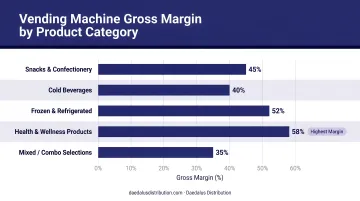
Profitability starts with the spread between wholesale product cost and vend price. Typical gross margins across vending categories range 40-60%, with standout performers like bottled water achieving up to 86% and coffee exceeding 200% per cup.
A cheaper machine stocked with low-margin items will often underperform a pricier smart machine with premium products. The machine cost is a one-time investment — product margin and transaction volume determine ongoing profitability.
Location and Foot Traffic
Placement is the single largest variable in vending revenue. A machine's daily transaction count is directly tied to foot traffic. Average monthly revenue per machine ranges $300-$1,500 depending on traffic, product selection, and location quality. Exceptional high-traffic locations (major airports, large office buildings) have been reported at up to $17,000/month.
Location types that consistently deliver:
- Corporate offices with 100+ employees
- University common areas and residence halls
- Hospitals and healthcare facilities
- Transit hubs (airports, train stations, bus terminals)
- Manufacturing facilities with shift workers
- Gyms and recreation centers with high daily visits
Operating Cost Structure
Net profit margins typically fall between 20-30%, meaning operating costs consume 10-40% of gross revenue. Main cost categories include:
| Cost Category | Approximate Range | Notes |
|---|---|---|
| Cost of Goods Sold (COGS) | 30-50% of revenue | Largest expense; varies by product type |
| Location Fees / Commissions | 5-25% of sales | Varies by location desirability; some charge flat rent |
| Payment Processing Fees | ~2.5% per transaction | Standard credit/debit processing |
| Electricity | $10-$50/month per machine | Refrigerated machines on the higher end |
| Maintenance & Repairs | $100-$300/year per machine | Minor repairs average $50-$200 per service call |
Smart machines with remote monitoring reduce unnecessary service visits — operators can check machine status and inventory levels remotely before dispatching a technician, cutting wasted trips and keeping costs down.
Cashless Payment Capability
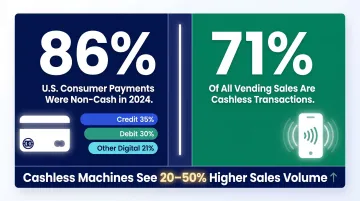
86% of U.S. consumer payments in 2024 were non-cash (credit 35%, debit 30%, other digital methods). Yet 25% of vending machines still lack cashless acceptance. Machines without card or contactless payment readers forfeit a significant share of potential transactions.
75% of vending machines now accept non-cash payments, and cashless transactions account for 71% of all vending sales. Machines with cashless capability see 20-50% higher sales volume than cash-only equivalents.
How to Choose the Right Machine for Your Business
Match the Machine Type to Your Specific Location First
Before evaluating machine features or pricing, profile your intended placement:
- Foot traffic volume — How many people pass the location daily?
- Customer demographic — Age, income level, health consciousness?
- Available space — Square footage and electrical access?
- Product needs — What's missing or inconvenient in this location?
Examples:
- Office building with 200+ employees → Combo snack + beverage or coffee machine (high daily transaction volume, consistent demand)
- Fitness center or gym → Fresh food/healthy meal machine or cold beverage (health-conscious customers, post-workout demand)
- Airport or hotel lobby → Electronics accessories or beauty/personal care (captive audience, emergency purchase behavior)
Model Your ROI Before Purchasing
Use this simple payback calculation framework:
Monthly Net Profit = (Estimated daily transactions × Average ticket price × 30 days) − Monthly operating costs
Payback Period (months) = Machine cost ÷ Monthly net profit
Example scenario (moderate case):
- Machine cost: $5,000
- Estimated daily transactions: 20
- Average ticket price: $2.50
- Monthly gross revenue: 20 × $2.50 × 30 = $1,500
- Gross margin: 50% = $750
- Monthly operating costs (COGS, location fee, electricity, processing): $450
- Monthly net profit: $750 − $450 = $300
- Payback period: $5,000 ÷ $300 = 16.7 months
Run conservative, moderate, and optimistic scenarios before committing — the spread between them reveals both your downside risk and your best-case ceiling.
Prioritize Remote Management If You Plan to Scale
Once your ROI model clears, the next question is whether your operation can grow without multiplying your labor. For operators managing more than one or two machines, remote inventory tracking and sales reporting become essential. Without that visibility, every machine requires a physical check-in, which limits how many locations a solo operator can manage.
Smart vending features that support growth:
- Real-time inventory alerts (low-stock notifications)
- Sales reporting by SKU (identify top performers)
- Remote machine health monitoring (prevent downtime)
- Route optimization (reduce unnecessary service trips)
Daedalus Distribution includes vending management software with every Vendekin machine — no separate licensing fees — so these capabilities are built in from day one rather than added as an afterthought.
Conclusion
The most profitable vending machine is not the most popular type or the most feature-rich model—it is the one that aligns with your specific location, customer behavior, and operational capacity. Start with one proven machine type, track real performance data, and expand only where the numbers support it.
For small business owners looking to start or modernize their vending operations, Daedalus Distribution offers Vendekin all-digital vending machines backed by U.S.-based support, remote inventory tracking, and fast nationwide delivery—designed to give operators real-time control over inventory and sales from the moment the machine goes live.
Ready to get started? Contact Daedalus Distribution at +1 843-490-2804 or email contact@daedalusdistribution.com (Monday-Friday, 8 AM-5 PM EST) to find the right Vendekin model for your location and goals.
Frequently Asked Questions
Which vending machines are most profitable?
Combo snack + beverage machines and coffee machines consistently rank as the highest earners for most operators due to high transaction volume and strong per-unit margins. Profitability is heavily influenced by location foot traffic, product markup (typically 40-60%), and operating cost management.
What is the most profitable item for vending machines?
Bottled water, coffee, and candy are high-margin staples. Bottled water can achieve up to 86% gross margin due to very low wholesale cost, while coffee generates margins exceeding 200% per cup (vend price more than 3x ingredient cost).
How many vending machines do you need to make $100k?
Based on average monthly net profit of $375 per well-placed machine (assuming $1,500/month revenue at 25% net margin), you would need approximately 22-23 machines to reach $100,000/year in net profit. Actual results vary significantly with location quality, product mix, and operational efficiency.
Do I need an LLC to run a vending machine?
An LLC is not legally required but is strongly recommended for liability protection and tax advantages. Most states also require a business license and sales tax permit regardless of structure. Common permit costs range from $10 to $300 per machine depending on your state and product type.
What is replacing vending machines?
Micro-markets, smart locker systems, and AI-powered grab-and-go stores are emerging formats. Micro-markets are growing at an 18.9% CAGR versus vending's 4.8%, but vending still commands 68% of industry revenue. Smart vending machines are upgrading the category from within, not being replaced by it.