: Complete Guide](https://file-host.link/website/daedalusdistribution-0jubjd/assets/refined-images/1781189430187000_fbdd4f0d5ab744c6938cb18233815c54/360.webp)
Many operators underestimate the difference between local transport and long-distance freight shipping. While both involve the same machine, the preparation, equipment, carrier choices, and risk factors differ dramatically. Most damage and injuries happen because operators assumed the process would be simpler than it actually is.
According to XPO's freight packaging data, at least 25% of a shipment's value is never recouped when damage occurs—and improper packaging is a primary reason carriers deny insurance claims. This guide covers everything you need to ship a vending machine safely: pre-shipment preparation, required equipment, step-by-step shipping procedures, cost factors, common mistakes, and how to choose the right shipping method.
Key Takeaways
- Standard vending machines weigh 400–900 lbs and require a pallet jack, moving blankets, ratchet straps, and a truck with liftgate or ramp
- Empty all products, coins, and cash; unplug and secure the power cord before moving
- Use LTL freight carriers for long-distance shipping; always palletize or crate the machine
- Refrigerated machines require 4 hours of upright settling time before powering on after transport
- Buying new? Many suppliers include coordinated delivery — eliminating the need to arrange freight yourself
What You Need Before Shipping a Vending Machine
Good preparation is what separates a clean, damage-free delivery from a costly mistake. Before anything moves, confirm you have the right equipment, completed machine prep, and a clear path from origin to destination.
Equipment and Tools Required
Essential equipment for safe vending machine transport:
- Heavy-duty pallet jack – Minimum 42-inch fork length for full-size machines, 36-inch for smaller models
- Dolly or hand truck with straps – Must be rated for commercial equipment, not residential use
- Furniture/moving blankets – At least 4-6 blankets to wrap the entire machine
- Packing tape and stretch wrap – Industrial-strength tape for securing blankets and cords
- Ratchet tie-down straps – Minimum 4 straps rated for 500+ lbs each
- Truck with lift gate or loading ramp – Consumer-grade pickup trucks are inadequate
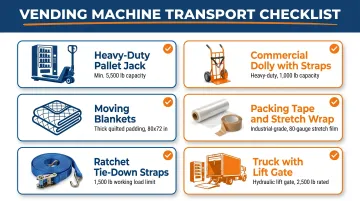
Improvising with consumer-grade equipment risks both machine damage and serious injury. For local moves, Home Depot rents 6,000-lb capacity pallet jacks. If you need a truck, Penske commercial box trucks (22-26 ft) include liftgates rated to 3,000 lbs — a safer choice than U-Haul's manual ramps.
Vehicle requirements: A cargo van, box truck, or flatbed with minimum 1,500-lb payload capacity is required for a single standard machine. For multiple units or heavier refrigerated models, contact a freight carrier directly to confirm the right vehicle specs.
Machine-Specific Prep Checks
Complete these steps before the machine moves:
- Empty all inventory – Remove every product, snack, and beverage
- Clear payment systems – Remove all cash and coins from bill validators and coin mechanisms
- Secure power cord – Unplug the machine and tape the cord securely to the back panel
- Lock doors – Lock or tape doors shut to prevent swinging during transit
Refrigerated machines need a few extra steps beyond this list.
For refrigerated vending machines: Drain condensation trays, then let the compressor settle before powering on. According to Samsung's refrigeration guidelines, machines transported upright need 2-3 hours of settling time. If the machine travels on its side, wait at least 4 hours before plugging in — this lets compressor oil resettle and prevents permanent damage.
Route and Access Assessment
Measure all doorways, hallways, elevators, and loading dock dimensions at both origin and destination before moving the machine. Standard full-size vending machines measure approximately:
- Height: 72–84 inches
- Width: 30–39 inches (wider models up to 47 inches)
- Depth: 30–37 inches
Measure before you move. A machine that doesn't fit through a doorway means expensive delays, potential damage, and a job that has to start over. It's one of the most common — and avoidable — mistakes operators make.
How to Ship a Vending Machine: Step-by-Step
The process below applies to both local transport and freight shipping, with freight-specific steps called out where they differ.
Step 1: Measure, Prepare, and Document
Measure the machine's exact dimensions and weight using manufacturer specs or a freight scale. Most combo units fall between 550–750 lbs, though heavier models can exceed 800 lbs.
Photograph the machine from all angles before shipping. This documentation is essential if a damage claim needs to be filed later. Carriers require evidence of pre-existing condition versus transit damage.
Step 2: Wrap and Protect the Machine
Wrap the machine fully in moving blankets or foam padding, securing them with stretch wrap or packing tape from bottom to top. Pay special attention to touchscreens and glass panels—cover these with thick cardboard or foam board before wrapping.
For freight shipping:
- Place the machine on a 40-42" x 48" pallet with four-way entry (XPO's published standard)
- Secure with ratchet straps running across multiple points
- For high-value or fragile digital/touchscreen machines, consider full wooden crating
Machines shipped unpalletized are frequently refused by carriers or arrive damaged. Carriers can also deny insurance claims if packaging doesn't meet their minimum standards — so proper pallet setup isn't optional.
Step 3: Load Onto the Transport Vehicle
Use a pallet jack to slide under the machine and raise it slightly—ensure the legs fully clear the floor. With at least one assistant guiding and one operating the pallet jack, move the machine slowly to the truck ramp or lift gate.
Keep these handling rules in place throughout loading:
- Never tilt the machine more than 45 degrees
- Avoid laying it on its back or side whenever possible
- If sideways transport is unavoidable in tight spaces, keep it brief and allow full settling time before powering on
Step 4: Secure the Machine in the Vehicle
Position the machine against the truck's front wall and secure it with multiple ratchet straps running across the machine at different heights—at one-third, mid-point, and two-thirds of the machine's height. The machine must not shift in any direction during transit — even minor movement can damage internal components, payment systems, touchscreens, and refrigeration units.
Once secured, double-check each strap before the vehicle moves.
Step 5: Unload and Inspect at the Destination
Upon arrival, reverse the loading process using the pallet jack and ramp/lift gate. Once positioned at the final location, remove all blankets and wrapping and conduct a full inspection:
- Check exterior for dents, scratches, or structural damage
- Test door locks and hinges
- Verify payment system components are intact
- Inspect touchscreens and digital displays for cracks
For refrigerated machines: Wait the appropriate settling period (minimum 4 hours if transported at an angle) before plugging in. Run a full test cycle to verify all systems function correctly before restocking.
Key Factors That Affect Vending Machine Shipping Costs and Safety
Four variables drive the majority of vending machine shipping costs: weight and freight class, distance and method, packaging quality, and insurance coverage. Getting any one of them wrong can mean unexpected surcharges, damaged equipment, or a $60 insurance payout on a $5,000 machine.
Machine Weight and Dimensions (Freight Class)
Freight carriers use the National Motor Freight Classification (NMFC) system based on weight, density, and handling difficulty. According to FreightCenter and uShip, vending machines typically fall into freight classes 125-175.
Class 125 — the most common classification for palletized vending machines — corresponds to items weighing 7-8 lbs per cubic foot. A typical 639-lb machine measuring 72" H x 39" W x 33" D occupies approximately 53.6 cubic feet, yielding 11.9 lbs/cu ft when empty. Adding pallet and crate volume drops the density into the Class 125 range.
Heavier, oversized machines cost more per mile and may require specialized equipment or liftgate service. Accurate classification upfront prevents costly carrier reclassification surcharges on delivery.
Distance and Shipping Method
Cost varies dramatically by distance and shipping method:
Estimated LTL freight costs for a 600-lb vending machine (Class 125, palletized, with liftgate at both ends):
- Short-haul (under 200 miles): $250–$500 total
- Regional (200–600 miles): $350–$700 total
- Cross-country (600–1,500+ miles): $500–$1,200+ total
These ranges are based on general LTL rates ($0.15–$0.30 per pound from uShip and $0.20–$0.45 per pound from Red Stag Fulfillment) plus accessorial fees. Actual rates vary by carrier, lane, and seasonal demand.
Accessorial fees add $300-500+ to base rates:
| Fee Type | Typical Cost Range |
|---|---|
| Liftgate service (both ends) | $100–$200 |
| Residential delivery surcharge | $50–$225 |
| Inside delivery | $75–$225 |
| Fuel surcharge | 15–45% of base rate |
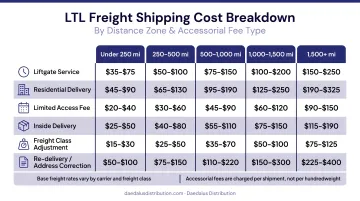
According to R+L Carriers' published tariff, residential delivery and inside delivery each carry a $225 minimum charge. Always request all-inclusive quotes specifying liftgate at both ends.
Transit times: LTL shipments typically take 2–7 business days within the U.S., according to FreightCenter. The "Plus Two Rule" adds one day for pickup and one for delivery to quoted transit days — a 3-day transit quote booked Wednesday may not deliver until the following Wednesday (7 calendar days).
Packaging and Crating
How the machine is packaged directly affects both cost and safety outcomes:
- Unpalletized machines are often refused by carriers or arrive damaged
- Palletized machines (standard packaging) reduce damage risk significantly
- Crated machines cost more upfront but reduce damage claims and protect high-value equipment
XPO's Packaging Guide specifies that crate strength can be increased up to 12x by adding diagonal bracing. Carriers may deny insurance claims if machines aren't packaged to minimum standards.
Insurance and Declared Value
Standard carrier liability is often severely limited. For a 600-lb used machine, the default coverage at $0.10/lb yields only $60 — against a $2,000–$8,000 replacement value. Here's how two major carriers structure their liability limits:
| Carrier | New Equipment | Used/Uncrated Equipment |
|---|---|---|
| Old Dominion (Tariff ODFL 100-Q) | $5.00/lb, max $50,000 | $0.10/lb, max $10,000 |
| R+L Carriers (May 2026 tariff) | $24.75/lb, max $100,000 | $0.10/lb, max $10,000 |
Third-party freight insurance typically costs 0.5–3% of declared value — roughly $10–$240 for a machine valued at $2,000–$8,000.
Operators should declare the machine's full value and purchase additional freight insurance through the carrier or a third-party provider like Warp or Falvey Insurance Group.
Common Mistakes When Shipping a Vending Machine
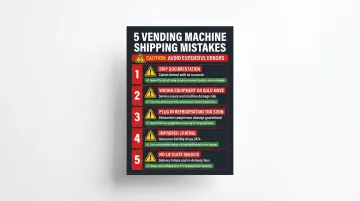
Most shipping problems are avoidable. These are the five mistakes that cause the most damage claims, injuries, and costly delays.
- Document before you ship: Skipping photos, dimensions, and weight is the top reason damage claims get denied. Carriers need proof of pre-existing condition to pay out — no documentation, no claim.
- Get the right equipment and help: A 600–900 lb machine cannot be moved safely alone. Without a pallet jack, lift gate, and at least one other person, you're looking at the majority of transport-related injuries and machine damage.
- Don't plug in refrigerated units immediately: Compressor oil needs time to resettle after tilting during transit. Plug in too soon and you can permanently damage the refrigeration system. Wait a minimum of 4 hours — even if the machine looks fine externally.
- Crate it properly: According to Falvey Insurance Group, "shipper negligence" (including improper packaging) is one of the main reasons carriers deny liability. R+L Carriers' liability drops from $24.75/lb to $0.10/lb for uncrated items — a 247x difference.
- Request liftgate service: No liftgate means you need a loading dock at both ends. Most residential and small business locations don't have one — so if you skip this service, the delivery may fail entirely.
Choosing the Right Shipping Method for Your Vending Machine
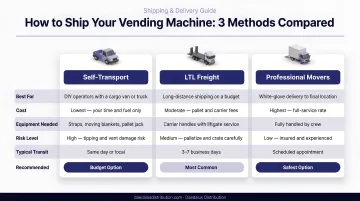
The right method depends on distance, budget, machine type, and how hands-on the operator wants to be. Each option has meaningful trade-offs.
Self-Transport (Rental Truck)
Renting a box truck or cargo van from companies like Penske or U-Haul is the most cost-effective option for local or regional moves when you have the physical capability and right equipment.
Best for: Single machines over short distances (under 200 miles) when the operator has experienced help and equipment access.
Costs include: Truck rental ($100–$300), fuel, dolly/pallet jack rental, and blankets.
Critical consideration: Penske 22-26 ft commercial box trucks include built-in liftgates rated to 3,000 lbs. U-Haul trucks use manual EZ-Load ramps without hydraulic assistance. For vending machines weighing 440–820+ lbs, Penske's liftgate provides significantly safer loading and unloading.
Not practical for: Cross-country shipping or operators without help.
LTL Freight Carrier
For long-distance or interstate shipping, LTL (less-than-truckload) freight is the standard method. The machine is palletized, picked up by a carrier, and delivered to the destination.
Recommended carriers:
- XPO: Covers 99% of U.S. zip codes, publishes detailed packaging guides
- R+L Carriers: Comprehensive tariffs and transit time tools
- Freightquote by C.H. Robinson: Online freight broker for comparison quotes from multiple carriers
Request liftgate service at both pickup and delivery if no loading dock is available. This is where proper crating and declared value become critical.
Businesses purchasing new Vendekin machines through Daedalus Distribution have freight handled directly from the company's U.S. warehouse in Summerville, South Carolina. That means no carrier sourcing or independent freight coordination on your end.
Professional Movers or Vending-Specific Logistics
Hiring a professional moving company with heavy equipment experience (or a vending-specific logistics provider) offers the least risk but highest cost.
Best for:
- High-value machines (digital/touchscreen models valued over $5,000)
- Operators without equipment or experience
- Difficult building access (stairs, no loading dock, narrow hallways)
Verify that movers have experience with heavy commercial equipment, not just residential furniture. Local moves typically run $300–$800+; long-distance costs more.
Frequently Asked Questions
How do people transport vending machines?
Vending machines are typically transported using a heavy-duty pallet jack or commercial dolly, loaded onto a truck with a ramp or lift gate, and secured with ratchet straps. The process always requires at least two people and full protective wrapping with moving blankets.
How much does it cost to ship a vending machine?
LTL freight for a 600-lb machine typically runs $250–$500 for short-haul (under 200 miles), $350–$700 for regional (200–600 miles), and $500–$1,200+ for cross-country. Estimates include liftgate service at both ends but exclude residential or inside delivery surcharges.
Can you ship a vending machine on its side?
Shipping a vending machine on its side is strongly discouraged and should only happen as a last resort for navigating tight spaces. Refrigerated machines transported on their side must stand upright for a minimum of 4 hours before being powered on to allow compressor oil to resettle and prevent permanent damage.
Do I need insurance to ship a vending machine?
Standard carrier liability coverage is typically limited and may not cover the machine's full value. For used machines, carriers like Old Dominion and R+L limit liability to $0.10 per pound (only $60 for a 600-lb machine). Purchase additional freight insurance or declare the machine's full value upfront to ensure adequate coverage.
What size truck do I need to transport a vending machine?
You need a cargo van or box truck with at least a 1,500-lb payload capacity, a built-in lift gate or loading ramp, and interior height that fits the machine (commonly 72–84 inches). Penske 22–26 ft box trucks with 3,000-lb liftgates are generally preferred over U-Haul's manual ramp setups.
How long does it take to ship a vending machine by freight?
LTL freight transit typically runs 2–7 business days for domestic U.S. shipments. Build in extra time for pickup scheduling, palletizing, and post-delivery settling — refrigerated machines need to stand upright for several hours before powering on.