Introduction
Vending machines have evolved far beyond coin-operated snack dispensers. Today's machines handle everything from fresh meals to electronics, reaching customers in locations traditional retail never could.
The numbers back it up. The global vending machine market hit $75.02 billion in 2025 and is projected to reach $99.23 billion by 2033—a steady 3.6% annual growth rate (Grand View Research). In the U.S., the convenience services industry generated $31.1 billion in 2025, up from $26.6 billion just two years earlier, an 8.1% annual expansion (NAMA Foundation).
That growth isn't evenly distributed. Most operators still run the same product mix they did a decade ago, while consumer demand has shifted toward convenience, health-conscious options, and niche services. Below are 15 vending ideas that match where that demand is actually heading—organized by category, with target locations and profitability drivers for each.
Key Takeaways
- Vending is no longer limited to chips and soda—fresh food, electronics, personal care, specialty beverages, and pet products all drive profitable operations
- Product-location pairing determines success more than the product itself—the right audience in the right location matters most
- Smart machines with touchscreen interfaces, cashless payment, and remote monitoring make these ideas practical to run at scale
- This guide covers 15 proven categories by consumer segment, with notes on what drives profitability for each
The Vending Machine Opportunity in 2025
The vending industry is undergoing structural transformation driven by three forces: consumer expectations for 24/7 access, universal adoption of cashless payment, and demand for product variety beyond traditional snack/beverage offerings.
Cashless payments now define the industry. In 2024, 71% of all U.S. vending transactions were cashless — up 17% year-over-year — with cashless users spending 55% more per transaction ($2.11–$2.24 vs. $1.36–$1.78 for cash) (PaymentsJournal). Total consumer spending at vending machines exceeded $3.5 billion, a 15% annual increase. Contactless cards and mobile wallets (Apple Pay, Google Pay) now drive over 75% of those cashless sales (Aurency).
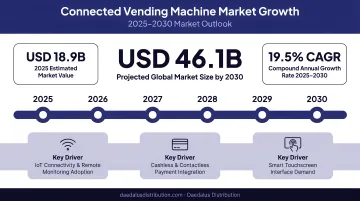
The payment shift also unlocks higher transaction values and gives operators real data to optimize product selection. The connected machine market reflects this momentum:
- 8.1 million connected vending units globally in 2025, projected to reach 11.7 million by 2030 (Berg Insight)
- 7.6% annual growth rate through 2030, with connectivity penetration already at 77.5%
- 2.6 million connected machines in the U.S. alone — digital infrastructure is now the baseline, not an upgrade
These trends create ideal conditions for non-traditional vending categories. The 15 ideas below cover categories where real consumer demand exists and conventional vending operators have consistently left revenue on the table.
15 Innovative Vending Machine Ideas
The following categories span food, wellness, personal care, tech, and specialty services. Each represents a product-audience match that succeeds in the right location with the right machine technology.
Health & Fresh Food Vending
Fresh Meal and Salad Machines
Refrigerated machines stocked with healthy, pre-portioned meals serve busy professionals who want real food without leaving their building. Farmer's Fridge operates over 2,000 machines across 22 cities, with revenue approaching $100 million and a 75% compound annual growth rate since 2013 (Inc. magazine).
The company has sold more than 31 million meals by stocking up to 50 different items per machine—salads, sandwiches, snacks—and restocking high-traffic locations like airports up to twice daily.
Target locations:
- Corporate offices with 100+ employees
- Hospitals and medical centers
- Airports and transit hubs
- University campuses
Profitability drivers: Premium pricing ($8-$12 per meal) with low labor overhead compared to cafeterias. Centralized food preparation enables quality control across a perishable supply chain.
Healthy Snack Machines
Replacing standard junk food with organic, protein-rich, or allergen-free snacks in specific venues commands higher per-unit margins. 65% of operators report client requests for healthier product mixes, with 59% viewing "better-for-you" products as a key growth opportunity (NAMA Foundation). Healthcare facilities vending alone is projected to exceed $2.18 billion by 2031, growing at 9.47% annually (Mordor Intelligence).
Target locations:
- Gyms and fitness centers
- Schools and daycare facilities
- Healthcare clinics and hospitals
- Wellness-focused corporate offices
Profitability drivers: Institutional locations increasingly require healthy options as a condition of placement. These products carry higher wholesale costs but also support 15-25% price premiums over traditional snacks.
Smoothie and Fresh Juice Machines
Automated blending or fresh-squeeze machines meet functional beverage demand in wellness-focused environments. JuiceBot positions itself as "the world's first robotic juice dispenser" designed to minimize oxidation (JuiceBot).
Target locations:
- Fitness centers and CrossFit gyms
- Yoga studios
- Transit hubs and airports
- College recreation centers
Profitability drivers: High margins on functional beverages ($6-$10 per serving). Critical operational considerations include daily cleaning protocols, fresh produce sourcing, and potential health code compliance for juice preparation equipment.
Tech & Electronics Vending
Phone Accessories and Charging Gear
Airports, train stations, college libraries, and conference centers see high conversion for cables, portable chargers, earbuds, and adapters. Customers facing urgent need—dead phone at an airport gate—accept premium pricing without hesitation.
Target locations:
- Airport terminals (especially security checkpoints)
- Train and bus stations
- University libraries and study lounges
- Convention centers and conference hotels
Profitability drivers: Products carry 100-200% markup over wholesale cost. Captive audiences with urgent needs accept premium pricing. Compact products minimize inventory investment per machine.
Consumer Electronics Vending
Best Buy Express launched electronics kiosks in 2008, reaching approximately 200 U.S. locations by 2018—80% inside airports spanning 50+ airports—plus nearly 40 Canadian locations.
Each machine stocks around 50 products including headphones, chargers, and GoPros at regular retail prices, with returns accepted at any Best Buy store (Best Buy Corporate).
Target locations:
- Major airport terminals
- Convention centers
- Tourist districts and entertainment venues
- University student centers
Profitability drivers: Higher-priced items increase average transaction value. Critical considerations include security (theft prevention) and inventory management for high-value SKUs. Note: The operator of Best Buy Express (Zoom Entertainment) later faced bankruptcy, illustrating that brand validation doesn't eliminate operator-level financial risk.
Specialty Food & Beverage
Specialty Coffee and Hot Beverage Machines
Automated espresso and bean-to-cup machines generate high-volume repeat purchases. Beverages command 38-45% of vending revenue globally, with hot beverages growing at 4.2% annually through 2030 (Grand View Research). The Office Coffee Service segment alone reached $2.62 billion with projected 10% annual growth (NAMA Census).
Target locations:
- Corporate offices and coworking spaces
- Hospitals and medical staff lounges
- University academic buildings
- Manufacturing facilities
Profitability drivers: Coffee is one of the most consistent revenue performers in vending. Repeat daily purchases from the same customers create predictable revenue. Machines require daily cleaning and regular bean/milk restocking.
Frozen Meal Machines
Refrigerated/frozen vending fills gaps for workers who need real meals without a nearby cafeteria. These machines serve locations where traditional food service is impractical due to space, staffing costs, or limited hours.
Target locations:
- Coworking spaces and small office buildings
- Hospital staff lounges (for night shift workers)
- Residential apartment buildings
- Manufacturing facilities with multiple shifts
Profitability drivers: Meals priced at $4-$8 provide margin between frozen wholesale cost and convenience pricing. Lower spoilage risk than fresh food. Requires reliable freezer equipment and regular temperature monitoring.
Hot Food Vending
On-demand hot food machines near transit hubs, bars, and late-night venues convert foot traffic into revenue during hours when traditional food service is closed. Piestro uses robotics to make pizza "at a fraction of the cost of traditional pizzerias" by eliminating retail footprint and labor (Piestro).
Target locations:
- Transit stations and subway platforms
- Bar districts and entertainment areas
- College dormitories
- 24-hour retail locations (gas stations, convenience stores)
Profitability drivers: Late-night and early-morning hours fill demand gaps when restaurants are closed. Premium pricing for immediate hot food. Operational complexity includes food safety compliance and machine cleaning protocols.
Fresh-Squeezed Orange Juice Machines
Automatic juicing machines offer novelty and premium positioning. Watching whole oranges feed into the machine and pour out as fresh juice is a natural attention-stopper in high-foot-traffic areas.
Target locations:
- Shopping malls and retail centers
- Hotel lobbies
- College student unions
- Airport terminals
Profitability drivers: Significant markup potential over pre-packaged juice ($4-$6 per serving vs. $2-$3 bottled equivalent). Requires daily fresh fruit delivery and cleaning. Machine maintenance and fruit waste management are key cost variables.
Lifestyle & Personal Care
Cosmetics and Beauty Product Machines
Benefit Cosmetics deployed 52 "Glam Up & Away" kiosks across 34 U.S. airports and cities by early 2018, stocking 30 TSA-approved products per unit with data-driven assortment optimization (OgmentO). Brands like Sephora have similarly validated this model in high-traffic retail environments.
Target locations:
- Airport terminals (especially post-security)
- Shopping malls and retail districts
- Hotel lobbies
- Convention centers
Profitability drivers: Beauty products carry exceptionally high margins (often 50-70% gross margin at retail). Impulse purchases driven by travel needs, forgotten items, or brand discovery. Compact products enable high SKU density per machine.
Feminine Hygiene and Personal Care Machines
Schools, offices, airports, and any high-traffic venue with restrooms represent consistent demand with minimal competition. This category builds goodwill with location hosts by solving a genuine need.
Target locations:
- Office buildings and corporate campuses
- Schools, colleges, and universities
- Airports and transit stations
- Shopping malls and entertainment venues
Profitability drivers: Necessity-driven purchases ensure steady demand. Products are small, non-perishable, and carry strong margins. Locations often welcome these machines as an amenity for visitors and employees.
Travel Essentials and Personal Hygiene Kits
Hotel lobbies, airport terminals, and transit stations are natural fits for travel-size toiletries, razors, dental kits, and wipes. Convenience pricing commands strong margins when travelers forget essentials.
Target locations:
- Hotel lobbies and resort properties
- Airport terminals (especially near gates)
- Train and bus stations
- Convention center hotels
Profitability drivers: Captive audience with urgent needs accepts 2-3x retail pricing. Compact, non-perishable inventory with long shelf life. Placement near hotel front desks or airport gates maximizes visibility during moments of need.
Niche & High-Opportunity Categories
Pet Product Machines
U.S. pet industry expenditures reached $158 billion in 2025, with 95 million pet-owning households and $34.4 billion in supplies and OTC medicine alone (APPA). Dog ownership penetration reached 53% of households (71 million), while cat ownership hit 39% (53 million).
Target locations:
- Dog parks and pet-friendly public spaces
- Veterinary offices and pet boarding facilities
- Pet-friendly hotels and resorts
- Pet supply store parking lots
Profitability drivers: Pet owners spend heavily and prioritize their pets' needs. Impulse purchases of treats, waste bags, and toys during park visits. Compact products and passionate customer base create ideal conditions for vending.
OTC Health and Pharmacy Machines
The FDA confirms no federal prohibition on selling OTC drugs via vending machines, though Connecticut, Wisconsin, and Oklahoma maintained state-level bans as of the most recent data (FDA). Machines dispensing pain relievers, vitamins, allergy medication, and first aid supplies solve the "forgot my medication" moment.
Target locations:
- Hospitals and medical centers
- College campuses and university housing
- Gyms and fitness centers
- Corporate offices and coworking spaces
Profitability drivers: High margins on health and wellness products. Necessity-driven purchases during moments of need (headache, allergy symptoms, minor injuries). Verify state and local regulations before deployment.
Eco-Friendly and Refill Station Machines
Sustainability-focused machines offering refillable containers for detergent, shampoo, or bulk snacks appeal to environmentally conscious consumers. Good Filling operates "the largest designer, assembler and operator of self-serve, zero-waste refill vending machines," dispensing home-care, personal-care, beverages, and shelf-stable foods. The company won the 2024 US Plastics Pact Sustainable Packaging Innovation Award (Good Filling).
Target locations:
- Universities and college campuses
- Natural food co-ops and grocery stores
- Urban neighborhoods with eco-conscious demographics
- Green office buildings and sustainability-focused workplaces
Profitability drivers: Premium pricing aligned with sustainability values. Lower product costs for bulk goods. Brand differentiation and alignment with environmental values can secure placement in competitive locations.
What Makes These Vending Ideas Profitable
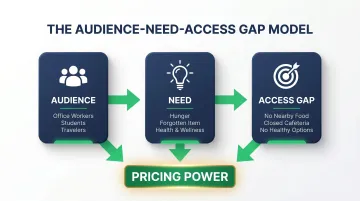
The most common mistake operators make is choosing a product they personally like rather than researching what a specific location's foot traffic actually needs. Profitability follows a simple framework: audience + need + access gap.
Audience: Who visits this location? Office workers, students, travelers, gym members, or pet owners?
Need: What problem are they trying to solve? Hunger, forgotten item, convenience, health, or entertainment?
Access gap: What's missing or inconvenient in this location? No nearby food, closed cafeteria, forgotten charger, or lack of healthy options?
When you align these three elements, pricing power follows naturally. Niche and convenience products command 2-4x retail markup because customers pay for immediacy. A phone charger that costs $3 wholesale can sell for $15 at an airport because the alternative is missing a flight or a working call. A fresh salad priced at $9 beats a $12 cafeteria meal when the cafeteria is a 10-minute walk away.
Industry data confirms modest but achievable economics. The NAMA 2022-23 Census found average annual sales of $6,284 per vending machine ($524/month), meaning an operator would need approximately 16 machines to reach $100,000 in gross annual sales (NAMA Census). Non-traditional categories—fresh food, electronics, specialty beverages—may generate higher per-unit revenue but also carry higher costs for equipment, inventory, and restocking frequency.
Low overhead makes profitability achievable at relatively modest sales volumes. Unlike brick-and-mortar retail, vending machines operate 24/7 without staff.
The primary cost variables to manage are:
- Location fees — typically 5-25% of revenue, depending on foot traffic
- Restocking frequency — higher for perishables and fast-moving SKUs
- Machine maintenance — reduced significantly with modern remote-monitoring equipment
Operators who manage these variables through sales data and route analytics can build profitable businesses even at industry-average revenue levels.
How Smart Technology Makes These Ideas Work
Most of the 15 ideas above are only operationally viable with modern digital machines. Legacy coin-operated machines lack the temperature control, cashless payment, remote monitoring, and inventory alerts that fresh food, health products, and high-value items require.
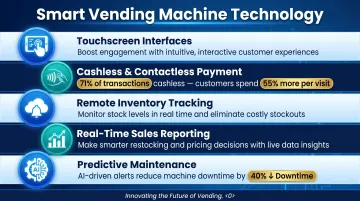
Key technology features operators should prioritize:
- Touchscreen interfaces — lets customers browse product images, nutritional info, and promotions before purchasing; drives upsells that static button panels can't
- Cashless and contactless payment — with 71% of transactions now cashless and cashless users spending 55% more per transaction, every machine should accept cards, Apple Pay, and Google Pay
- Remote inventory tracking — cloud alerts tell operators when stock is running low, eliminating wasted site visits and reducing costly stockouts
- Real-time sales reporting — sell-through rates by SKU and by machine let operators cut waste, adjust product mix, and increase revenue without guesswork
- Predictive maintenance — machine learning algorithms reduce downtime by over 40% (Mordor Intelligence), keeping machines earning instead of sitting idle
The global installed base of smart machines reached 8.1 million units in 2025 and will hit 11.7 million by 2030, representing 77.5% penetration (Berg Insight). Operators deploying non-connected machines fall further behind on both efficiency and per-machine profitability as the industry standard shifts.
Daedalus Distribution carries Vendekin smart machines built around every feature on this list — touchscreen interfaces, remote tracking, cashless payment — with U.S.-based parts and service support so operators can scale without chasing down repairs.
Conclusion
The vending machine industry rewards operators who align their product idea with a real, underserved consumer need in the right location. The 15 ideas above represent categories where demand is proven and traditional vending has historically underserved—from fresh meals in corporate offices to pet products near dog parks to beauty essentials in airport terminals.
No single idea guarantees success. Before deploying any machine, three questions determine whether it will profit or struggle:
- Who is my customer here — office workers, students, travelers, gym members, or pet owners?
- What do they need that they can't easily get — fresh food, a forgotten item, a healthy option, or a specialty product?
- Does my machine have the technology to deliver it reliably — temperature control, cashless payment, remote monitoring, and inventory alerts?
Answer those three questions correctly, and you have a location-product-technology fit that generates consistent revenue with minimal day-to-day overhead.
Operators looking to modernize their vending business or launch with the right machine can reach out to Daedalus Distribution. As the authorized U.S. reseller for Vendekin Technologies, they supply touchscreen digital machines backed by U.S.-based installation, parts, and ongoing technical support. Contact them at +1 843-490-2804 or contact@daedalusdistribution.com to find the right machine for your location and goals.
Frequently Asked Questions
What are the most profitable items to sell in vending machines?
The most profitable categories include beverages (which command 38-45% of market share), fresh food, specialty snacks, and personal care products. However, profitability depends more on location match and markup potential than product popularity alone. A healthy snack in a gym commands higher margins than the same product in a gas station.
What are the most profitable vending machine types or business models?
Combo machines, specialty food machines (fresh meals, coffee), and digital/smart machines consistently outperform basic models. Route-based multi-machine operations generate better returns than single-machine setups by spreading overhead across multiple high-traffic locations.
How many vending machines do you need to make $100,000 a year?
At the industry average of $6,284 annual sales per machine, you'd need roughly 16 machines to hit $100,000 in gross sales. Location quality matters enormously—a fresh food machine in a corporate office can generate 2-3x the average, while a poorly placed machine falls well short.
What are some unique or innovative vending machine ideas?
Proven innovations include fresh meal vending (Farmer's Fridge), electronics kiosks in airports, beauty products in hotels, pet supplies near dog parks, and eco-friendly refill stations. Success comes from finding an underserved audience in a high-traffic location—not just picking an unusual product.
What is replacing vending machines?
Vending machines aren't being replaced—they're evolving. Smart kiosks, automated retail platforms, and micro-market setups are the next generation of the model. Digital machines with touchscreen interfaces, cashless payment, and remote monitoring now meet modern retail expectations while keeping the convenience that made vending successful.